Looming Government Shutdown Mitigation in the Times of COVID-19: Contractors should take steps now to prepare!
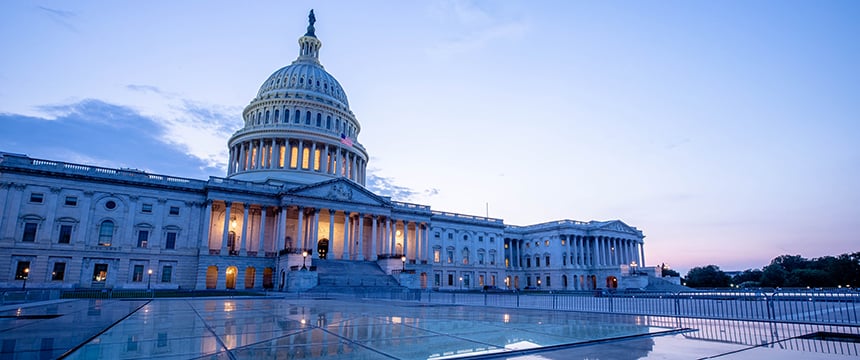
Congress fortunately reached a last-minute deal for a continuing resolution yesterday, averting a government funding lapse, commonly known as a “shutdown” until December 3, 2021. That gives government contractors just over two months of breathing room to take steps to prepare for a potential government funding lapse that would have a major impact on government contracts.
If the Government fails to reach an agreement on an annual appropriation by December 3, 2021, Federal programs that run on annual appropriations will shut down until Congress reaches an agreement, unless they are excepted or exempt under the Anti-Deficiency Act. The Anti-Deficiency Act excepts from lapse those actions taken to preserve the safety of human life and the protection of property. Therefore, the government may incur obligations during a lapse as long as those obligations are used for the imminent protection of human life and property. The government may not incur obligations for ongoing, regular functions that do not imminently protect life and property. Doing so would constitute an Anti-Deficiency Act violation.
There are a number of federal programs and federal agencies funded by appropriations other than annual appropriations. These include the United States Patent & Trademark Office and programs funded by the Disaster Relief Fund. Self-sustaining programs, such as the United States Postal Service, may also continue to operate. Finally, functions necessary for the President to discharge his constitutional duties, including conducting foreign diplomacy and protecting national security, will not stop during a funding lapse.
Historically, the Office of Management and Budget (“OMB”) took the view that even if the government is permitted to incur obligations under an Anti-Deficiency Act exception the government must still minimize such obligations. If a government contract is not covered by an exception or exemption, the Government must cease those obligations, often through the issuance of a stop-work order, until Congress approves an appropriation or continuing resolution. Government contracting officers often work with contractors as part of lapse planning to determine whether work performed under an individual contract is excepted or exempt.
During the prolonged 2018-2019 shutdown, OMB took a broader view of the types of activities that could qualify for an exception than it had in the past. This was good news for contractors working on contracts that were funded out of annual appropriations, in that the disruption was not as severe as it could have been. The government’s ongoing response to the COVID 19 pandemic gives us reason to believe that OMB would in the event of lapse once again take a broader view of the life and property protection. The government has already issued new requirements for contractors to help protect human life by preventing the spread of COVID-19. The whole of government effort to respond to the COVID-19 pandemic has led to mission creep that could provide contractors with credible arguments that the activities they are performing protect life and property and that they should continue even during a funding lapse. For example, it is not difficult to craft an argument that a contract for goods and services that the Government regularly purchases, such as antibacterial wipes and medical personnel, should be excepted during a lapse in funding on the ground that they are specifically procured for the imminent protection of life from COVID-19.
In light of the risk of a December shutdown, we recommend that contractors take the following steps now in order to begin crafting arguments that their contracts should be excepted:
- Identify which of the contractor’s federal contracts and subcontracts are excepted or exempt under the Anti-Deficiency Act, as well as those that could be due to the unique circumstances of the COVID 19 pandemic;
- Communicate with your contracting officers to ensure they understand the parameters of your work and the portions that protect life and property;
- Ensure you are prepared to keep detailed records of work performed under excepted or exempt contracts and their associated costs during a government shutdown;
- Identify what steps you can take to mitigate costs during the potential government shutdown; and
- Communicate with your subcontractors and employees, so that they are prepared for the possibility of a stop work order.
Foley lawyers have unique experience to help address the legal and business challenges created by a potential lapse in appropriations. Mike Walsh ([email protected]) served at the U.S. Department of Commerce during five funding lapses, David Ralston ([email protected]) has advised government contractors on all of their legal issues for decades, and Megan Chester ([email protected]) served in the Procurement Law Branch of the Federal Emergency Management Agency during two funding lapses. Please feel free to contact any of them to discuss lapse planning for December.
Admitted only in Minnesota. Practicing under the supervision of a member of the DC Bar.