A New Regulatory Landscape for Consumer Products Containing Button Cell or Coin Batteries
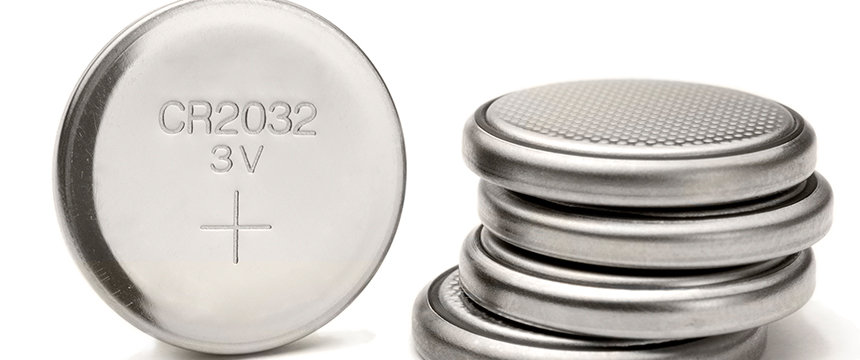
New regulations from the Consumer Product Safety Commission (CPSC) are set to go into effect on March 19, 2024, for manufacturers and importers of consumer products containing button cell and coin batteries (or products intended to contain them).[1] In particular, consumer products containing or designed to use a button cell or coin battery that are manufactured or imported on or after March 19, 2024, must comply with new labeling requirements as well as “performance requirements” related to how the product itself secures its battery.[2]
These new requirements stem from and implement “Reese’s Law,” a federal law passed in August 2022 intended to protect children and other consumers against the hazard of ingesting button cell or coin batteries.[3] A detailed discussion on Reese’s Law and its implementing regulations can be found here.
Despite requests from industry groups, the CPSC denied a request to further extend this enforcement deadline beyond March 19, 2024.[4]
Accordingly, in navigating this new regulatory landscape, manufacturers and importers of consumer products utilizing button cell and coin batteries should ask at least the following questions.
Are my products “consumer products”?
The regulations implementing Reese’s Law apply to “consumer products” (containing button or coin cell batteries) as that term is defined in the Consumer Product Safety Act (CPSA)[5]: “any article, or component part thereof, produced or distributed (i) for sale to a consumer for use in or around a permanent or temporary household or residence, a school, in recreation, or otherwise, or (ii) for the personal use, consumption or enjoyment of a consumer in or around a permanent or temporary household or residence, a school, in recreation, or otherwise[.]”[6]
However, the CPSA carves out a few categories of products, or products used only in certain contexts, from being considered a “consumer product.”[7] For such exempted products, the new requirements of Reese’s Law would not apply.
Are my products sold with batteries, packaged together?
The regulations implementing Reese’s Law provide labeling and performance requirements to consumer products themselves which contain button cell or coin batteries, regardless of whether the batteries are included or sold separately.[8]
However, Section 3 of Reese’s Law provides imposes further requirements on the sale of button cell or coin batteries themselves—specifically that the packaging in which such batteries are sold must comply with the Poison Prevention Packaging Act (PPPA).[9]
Accordingly, stricter regulations would apply to a product sold with button cell or coin batteries, rather than by itself (batteries not included).
Does my product have a battery compartment?
The regulations implementing Reese’s Law provide for several “performance requirements,” whereby a consumer product containing button cell or coin batteries must secure such a battery inside the product under reasonably foreseeable use or reasonably foreseeable misuse to minimize the risk of ingestion.[10]
Given this, manufacturers or importers of products containing (or designed to contain) button cell or coin batteries should ensure that their products comply with these requirements—particularly if the covered products contain a battery compartment.[11]
Fabrico o importo un producto cubierto. ¿Qué debo hacer?
In light of this new regulatory landscape, these new requirements should be top-of-mind for all manufacturers and importers of products containing button cell or coin batteries.
Los fabricantes e importadores deben tomar medidas inmediatas para garantizar que sus productos cumplan con esta nueva norma, lo que incluye consultar con asesores legales experimentados según corresponda. Además, para garantizar el cumplimiento, los fabricantes e importadores de los productos afectados deberán coordinarse con sus proveedores. Con ese fin, los fabricantes e importadores deben dar prioridad a estos nuevos requisitos de la CPSC al realizar sus revisiones o auditorías anuales de cumplimiento para identificar y corregir cualquier deficiencia en materia de cumplimiento.
[1] Norma de seguridad para pilas de botón o pilas tipo moneda y productos de consumo que contienen dichas pilas, 16 C.F.R. § 1263 (2023).
[2] See Button Cell and Coin Battery Business Guidance, Consumer Product Safety Commission, https://www.cpsc.gov/Business–Manufacturing/Business-Education/Business-Guidance/Button-Cell-and-Coin-Battery.
[3] Reese’s Law, 15 U.S.C. § 2056e.
[4] See Letter from Robert S. Kaye, Director of the Consumer Product Safety Commission’s Office of Compliance and Field Operations, dated February 12, 2024 (publicly accessible online at https://www.cpsc.gov/s3fs-public/Reeses-Law-Implementation-Dates-02-12-24.pdf?VersionId=3MnZs8Pf7L_pR9vj2uqcFl2N4r9B.phw).
[5] See Notes to Reese’s Law, 15 U.S.C. § 2056e (“A product is covered by Reese’s Law and its implementing regulation if it is “[1] a consumer product [2] containing or designed to use one or more button cell or coin batteries, regardless of whether such batteries are intended to be replaced by the consumer or are included with the product or sold separately.”); see also 16 C.F.R. 1263.2.
[6] Consumer Product Safety Act, 15 U.S.C. § 2052(a)(5).
[7] See id. §§ (A) through (I).
[8] Notas a la Ley Reese, 15 U.S.C. § 2056e; véase también 16 C.F.R. 1263.2.
[9] See Button Cell and Coin Battery Business Guidance, Consumer Product Safety Commission, https://www.cpsc.gov/Business–Manufacturing/Business-Education/Business-Guidance/Button-Cell-and-Coin-Battery; see also 16 C.F.R. 1700.15 (regulation implementing the Poison Prevention Packaging Act).
[10] 16 C.F.R. §§ 1263.1(a), 1263.3 (2023).
[11] See Safety Standard for Button Cell or Coin Batteries and Consumer Products Containing Such Batteries, 88 Fed. Reg. at 65278 (Table 1a.).