Centro de datos Hub
El sector de los centros de datos está experimentando un crecimiento explosivo, impulsado por el auge de la inteligencia artificial y la demanda de infraestructura digital. Manténgase al día con nuestro Centro de datos.
Registrarse
Descubra qué riesgos, correcciones e innovaciones pueden definir la próxima década para los centros de datos.
¡Ya está aquí!
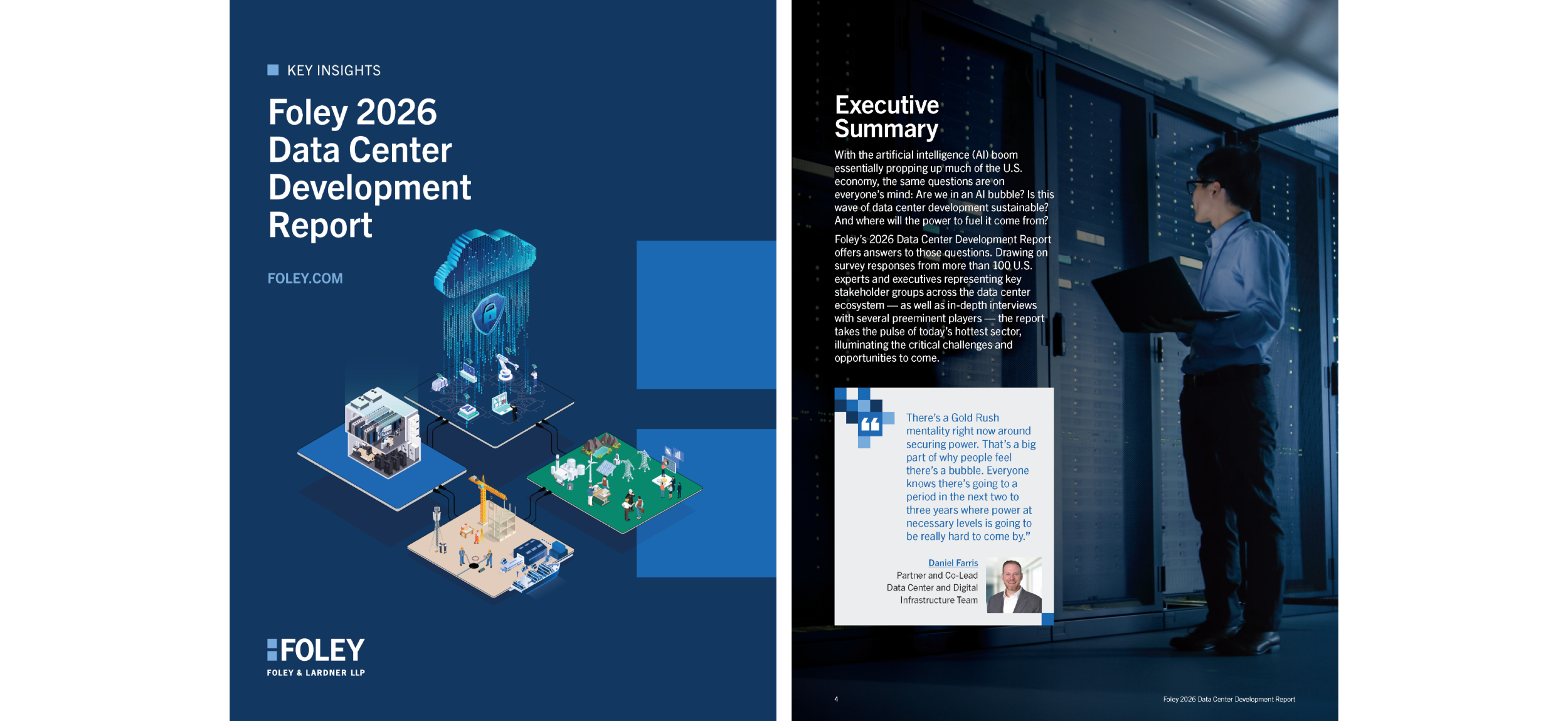
Perspectivas para los centros de datos en 2026: demanda de IA, energía y crecimiento
La inteligencia artificial está impulsando un crecimiento sin precedentes en la economía estadounidense y provocando un auge en el desarrollo de centros de datos. Pero siguen sin resolverse algunas cuestiones fundamentales: ¿se trata de una burbuja de IA? ¿Podrá mantenerse esta ola de expansión de los centros de datos? ¿Y cómo garantizaremos la infraestructura energética necesaria para alimentarlos?
El informe sobre el desarrollo de centros de datos Foley 2026 ofrece información detallada sobre las tendencias en centros de datos, los retos de la infraestructura de IA y las soluciones energéticas. Basado en las respuestas a una encuesta realizada a más de 100 expertos y ejecutivos del sector, además de entrevistas exclusivas con figuras destacadas, este informe analiza las oportunidades y los riesgos que configurarán el futuro de la infraestructura digital.
Regístrate para descargar tu copia o ve nuestro seminario web sobre el informe de centros de datos bajo demanda.
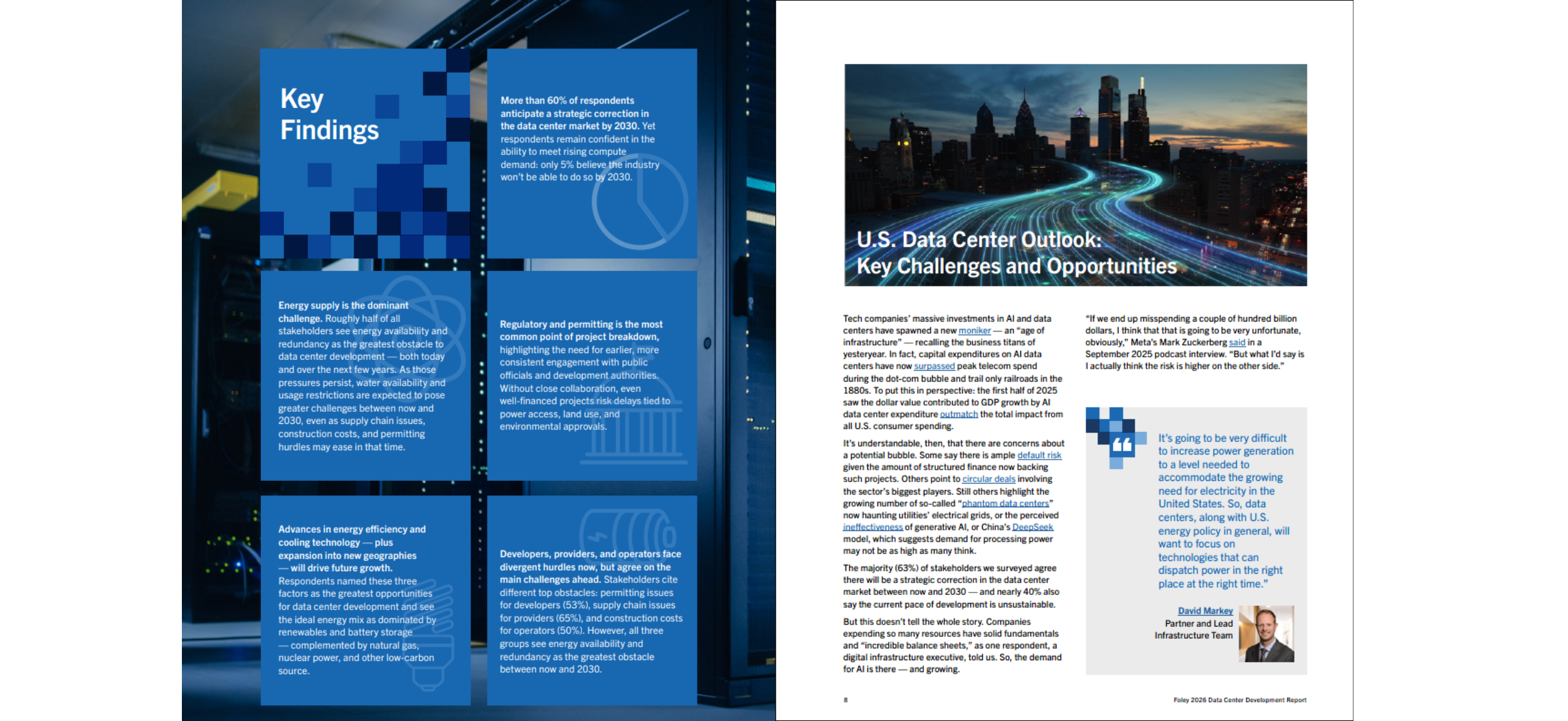
- El mercado está en auge, pero se avecina una corrección. Más del 60 % de los encuestados espera un ajuste del mercado para 2030, pero la confianza sigue siendo fuerte: solo el 5 % cree que la industria no podrá satisfacer la creciente demanda informática.
- La energía y la concesión de permisos son las barreras determinantes. Aproximadamente la mitad de los líderes del sector citan la disponibilidad y la redundancia de la energía como los mayores obstáculos para los nuevos desarrollos, mientras que la complejidad de la concesión de permisos sigue siendo el motivo más común de retraso de los proyectos.
- La innovación y la diversificación serán la clave para el crecimiento futuro. Las partes interesadas señalan los avances en refrigeración, las mejoras en eficiencia y la expansión a nuevas zonas geográficas como las oportunidades más prometedoras, respaldadas por una combinación energética dominada por las energías renovables y el almacenamiento, con el gas natural y la energía nuclear desempeñando funciones complementarias.
VER A LA CARTA
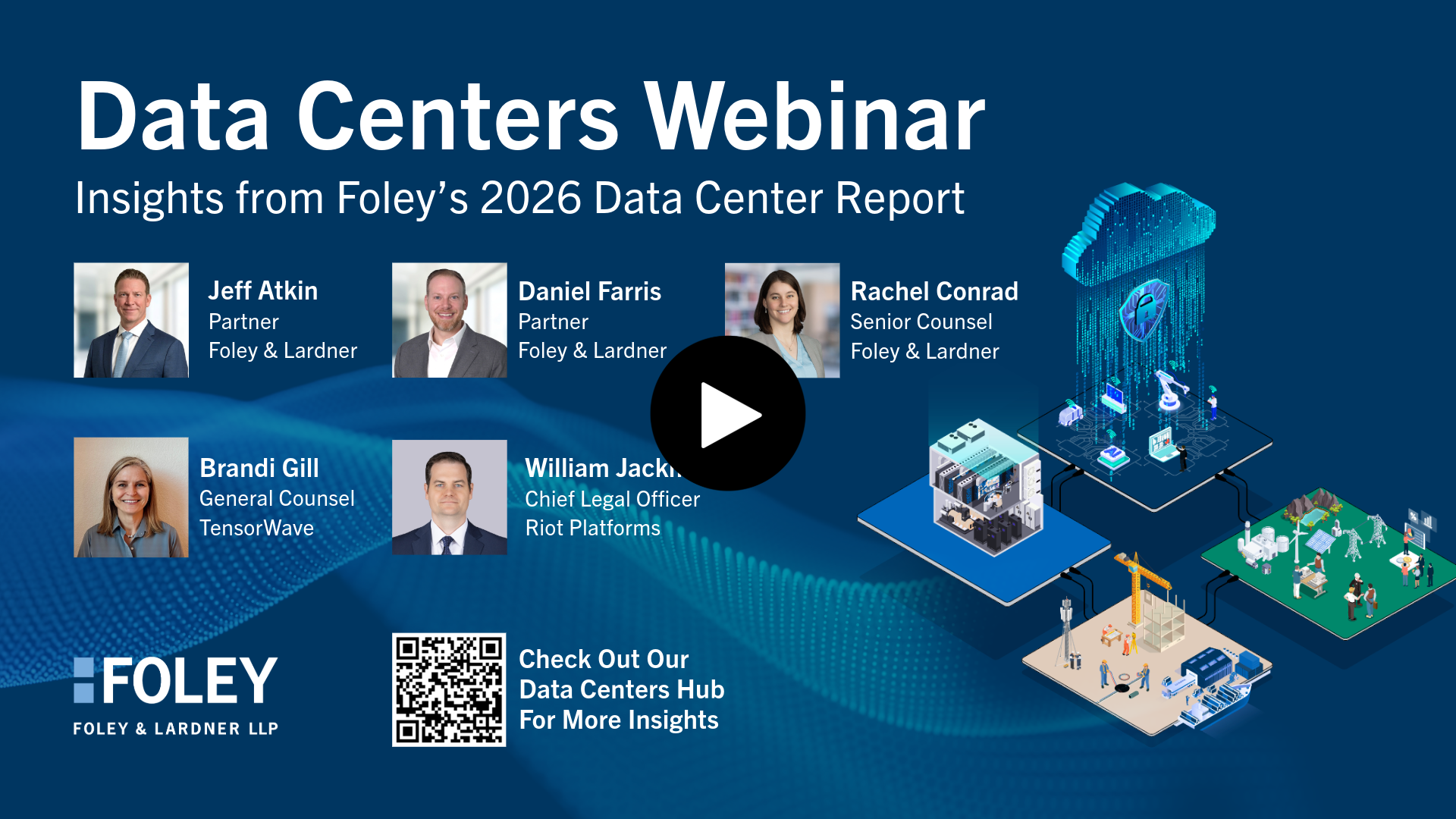
Conclusiones del Informe sobre el desarrollo de centros de datos de 2026 de Foley & Lardner
Analiza en profundidad las oportunidades, los retos y los cambios estratégicos que están marcando el crecimiento de los centros de datos en Estados Unidos en la era de la IA.
Dirigido por expertos con amplia experiencia en el sector, este seminario web analiza las principales conclusiones sobre la disponibilidad de energía, los obstáculos normativos y los riesgos de corrección del mercado, así como las oportunidades en el ámbito de las energías renovables, el almacenamiento en baterías y las tecnologías de refrigeración, además de la expansión geográfica y las perspectivas específicas para cada grupo de interés, dirigidas a promotores, proveedores y operadores.
¿Quieres más? Explora todo el ecosistema del centro de datos.
La rápida expansión del sector de los centros de datos trae consigo tanto oportunidades como retos: garantizar fuentes de energía fiables, sortear los obstáculos normativos y gestionar las limitaciones de la cadena de suministro, todo ello sin dejar de cumplir los objetivos de sostenibilidad.
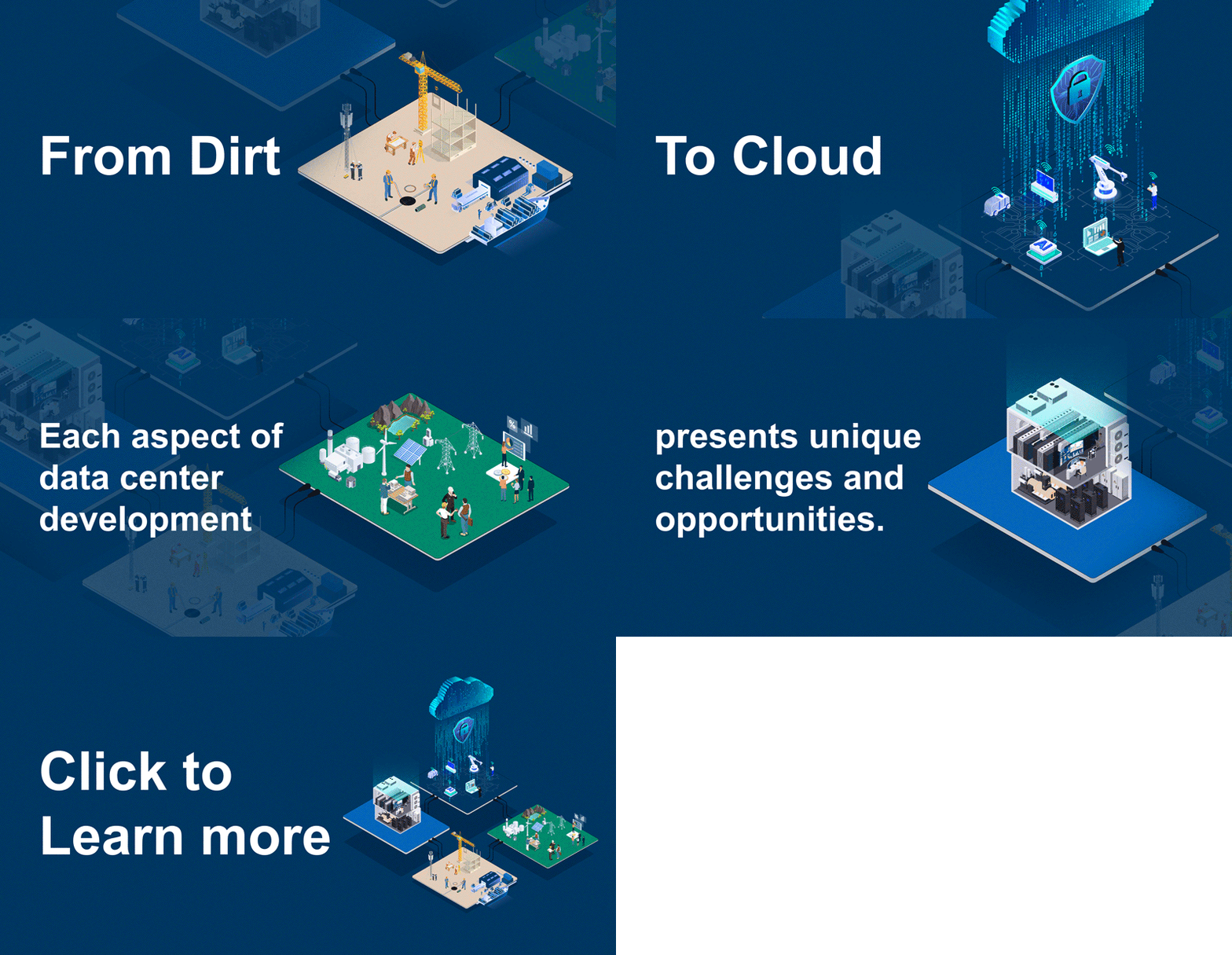
Desde la tierra en la que se asientan hasta las «nubes» que ocupan, los centros de datos tienen mucho que ofrecer. Acceda a información de primer nivel sobre el alquiler de centros de datos, la computación en la nube, la construcción, la energía y mucho más.
Ya disponible: Acuerdos de suministro para centros de datos: manual para abogados internos
Este nuevo recurso está diseñado para ayudar a los equipos jurídicos y comerciales a gestionar los riesgos emergentes, negociar acuerdos más sólidos y aprovechar las oportunidades en los acuerdos de suministro de centros de datos.