




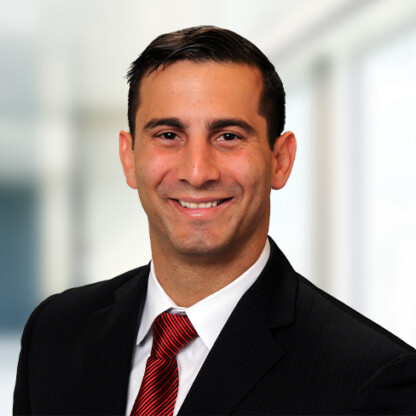
Foley Senior Counsel Thomas (T.J.) Ferrante, member of the firm’s Telemedicine and Digital Health Industry Team, will present at Modern Healthcare’s Healthcare Transformation Summit in Austin, Texas on May 16-17. His presentation is titled: “Virtual Health: The Emerging Power of Telehealth and Remote Patient Monitoring in Sustaining Good Health.”
Mr. Ferrante will serve as moderator and be joined by an expert panel including:
- Jonathan Bailey, Chief Program Development Officer at Mission Hospital
- Anne Burdick, Executive Director, Telehealth at University of Miami Miller School of Medicine
- J. Gavin Helton, M.D., President at Mercy Virtual-Clinical Integration
This session on the transformative power of technology will help attendees:
- Understand why healthcare must bring more intelligence to data analysis
- See how health plans, providers and tech companies are conducting research in real-world environments
- Learn how technology supports providers in prescribing tools that meet consumers’ personal needs
- Discover how caregivers and care managers will rely on data to keep people healthy
- Grasp how technology, data and artificial intelligence come together to drive care decision making
- Know where telehealth and remote patient monitoring are headed by 2030
For more information and to register for the Healthcare Transformation Summit, visit the conference website.
People
Related Insights
May 22, 2026
Foley Viewpoints
New Lawsuit Tests the Limits of Donor-Advised Fund Advisory Privileges
A recent lawsuit seeking to clarify the extent of an advisor’s privileges with respect to a donor-advised fund (DAF) has been filed in…
May 22, 2026
Energy Current
FERC Just Rewrote the Rules for Natural Gas Infrastructure. Here’s What It Means.
Yesterday’s unanimous FERC vote is the most significant natural gas permitting reform in two decades — and its practical implications…
May 22, 2026
Foley Viewpoints
What the Federal Circuit’s Poultry Patent Ruling Says About 'About'
The decision does not appear to prohibit the use of terms such as "about" or "approximately." Rather, it reinforces that such terms may be acceptable where the patent record provides sufficient context for understanding the scope of the claimed range.