



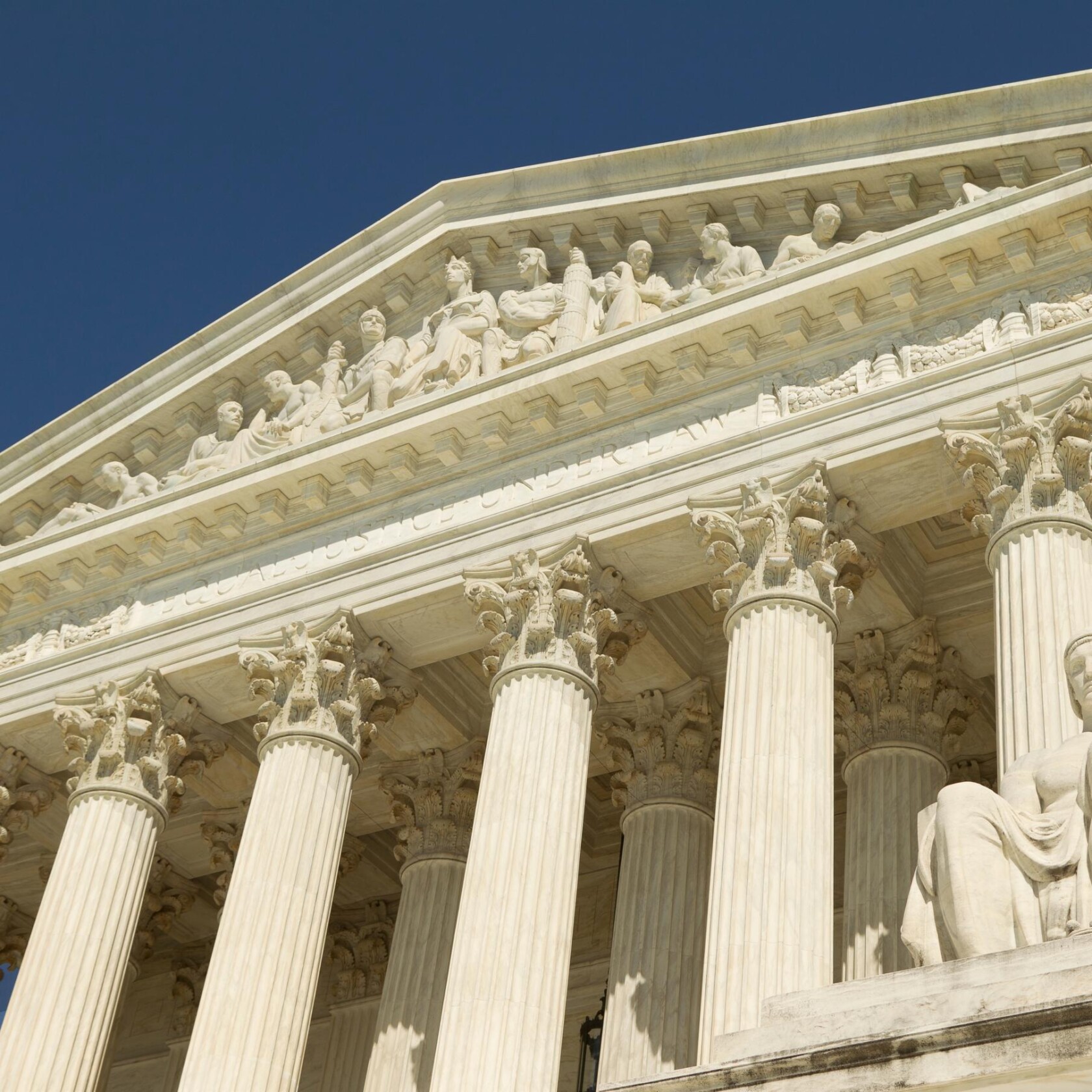

The Supreme Court recently agreed to hear an appeal in the case of Ongkaruck Sripetch v. U.S. Securities and Exchange Commission after the Securities and Exchange Commission (SEC) submitted a brief agreeing a grant of certiorari was needed to resolve a circuit split on the issue of disgorgement.[1] By granting certiorari, the Supreme Court has agreed to address whether pecuniary harm to investors must be proven in order for district courts to order disgorgement. Oral arguments are anticipated in April 2026 and a ruling by July 2026, though the exact date has yet to be set.
Traditionally, courts have ordered defendants to disgorge ill-gotten gains from securities violations without consideration of pecuniary harm.[2] However, the Second Circuit ruled that, in light of the Supreme Court’s Liu decision,[3] the SEC must prove investors or victims suffered monetary harm in order to obtain disgorgement.[4] This requirement necessarily limits the amount of money the SEC is able to obtain in cases without identifiable victims.
The SEC, in its brief in support of certiorari, argues that the Ninth Circuit was correct in finding that neither the new subsection (d)(7)[5] nor subsection (d)(5),[6] which the Liu opinion analyzed, require the SEC to prove pecuniary harm. The SEC further asserts “[s]ubsection (d)(7) independently authorizes a district court to award disgorgement.” This provision was adopted by Congress in 2021 after the Supreme Court issued its opinion in Liu. The SEC notes that this new subsection, which specifically addresses disgorgement, does not contain the phrases “for the benefit of investors” or “equitable relief,” both of which played a key role in the Liu decision.
As summarized here in the Sripetch case, a group of defendants allegedly operated a network of fraudulent microcap schemes.[7] The SEC further alleged that they orchestrated “scalping” campaigns: purchasing and controlling microcap stocks, tainting them through pump campaigns, and selling them at inflated prices without disclosing their intent and without registering the securities.[8] Sripetch, as one of the lead defendants, consented to a final judgment against him and agreed that the District Court could order disgorgement.[9] After hearing arguments, the District Court ordered him to disgorge $2,251,923.16, plus more than $1 million in prejudgment interest without requiring the SEC to show pecuniary harm.[10] The Ninth Circuit upheld this ruling,[11] deepening a circuit split between the First Circuit, which has found a showing of pecuniary harm is not necessary,[12] and the Second Circuit, which has found the SEC must show pecuniary harm.[13]
[1] SEC v. Sripetch, 154 F.4th 980 (9th Cir. 2025), cert. granted sub nom. Sripetch v. SEC, No. 25-466, 2026 WL 73091 (U.S. Jan. 9, 2026).
[2] See SEC v. Hallam, 42 F.4th 316, 338 (5th Cir. 2022).
[3] Liu v. SEC, 591 U.S. 71 (2020).
[4] SEC v. Govil, 86 F.4th 89, 98 (2d Cir. 2023).
[5] 15 U.S.C. 78u(d)(7).
[6] 15 U.S.C. 78u(d)(5).
[7] Ongkaruck Sripetch, et al., SEC Litigation Release No. 26332 (June 20, 2025), https://www.sec.gov/enforcement-litigation/litigation-releases/lr-26332.
[8] SEC v. Sripetch, No. 20-CV-01864-H-BGS, 2024 WL 1546917, *2-*3 (S.D. Cal. Apr. 8, 2024).
[9] Final Judgment as to Defendant Ongkaruck Sripetch, SEC v.Sripetch, No. 3:20-cv-01864-H-BGS (S.D. Cal. April 17, 2024), Dkt. No. 172, https://www.sec.gov/files/litigation/litreleases/2025/judg26332-sripetch.pdf.
[10] SEC Litigation Release No. 26332, supra note 7.
[11] Sripetch, 154 F.4th 980, supra note 1.
[12] SEC v. Navellier & Assocs., 108 F.4th 19 (1st Cir. 2024), cert. denied, 145 S. Ct. 2777 (2025).
[13] Govil, 86 F.4th 89, supra note 3.