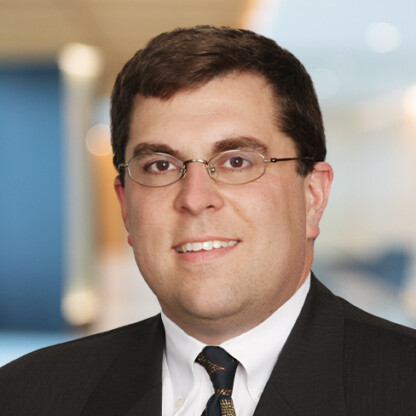
Gregory Husisian Assesses U.S. Trade Developments, Customs Enforcement Trends
Foley & Lardner LLP partner Gregory Husisian shared observations on evolving U.S. trade policy in the Law360 article, “Trade Legal Matters To Watch: Midyear Report.”
Husisian assessed the Trump administration’s imposition of tariffs under the International Emergency Economic Powers Act (IEEPA), noting that the measures contrast with Congress’ original intention in creating the IEEPA. Congress passed the IEEPA to “limit these things, and then Trump uses that same statute as justification,” he commented.
Husisian expressed surprise at how the administration has not implemented a “belts and suspenders” approach with a Section 301 trade investigation or another tariff authority to hedge against courts striking the duties down.
“I wouldn’t expect the Trump administration to back off,” he added. “I think they would go to a different statutory authority, which is why I don’t understand why they’re not doing it now so that there’s not a gap, which would disrupt their negotiations.”
At ground level, Husisian noted he is seeing increased U.S. Customs and Border Protection (CBP) administrative enforcement with clients receiving more formal requests for import data, especially around Chinese goods and imports under the United States-Mexico-Canada Agreement. These inquiries often focus on valuation, classification, and potential duty evasion.
“Not surprisingly, those are the areas that would give you the biggest tariff savings if you are trying to manipulate the system,” he added.
Husisian expects this heightened scrutiny to affect companies operating “China plus one” strategies, where goods are routed through third countries before entering the United States. The attention means U.S. companies – often the importer of record – are concerned with properly documenting their supply chains and ensuring compliance with CBP rules, while foreign companies are paying attention to how CBP approaches transshipment matters.
“For the foreign companies, it’s like whack-a-mole and CBP is constantly chasing them; transshipment feels like their biggest tool and their biggest risk,” he added.
(Subscription required)