Flower Foods Inc. v. Brock: A Missed Opportunity for Guidance Regarding the FAA’s Transportation Worker Exemption
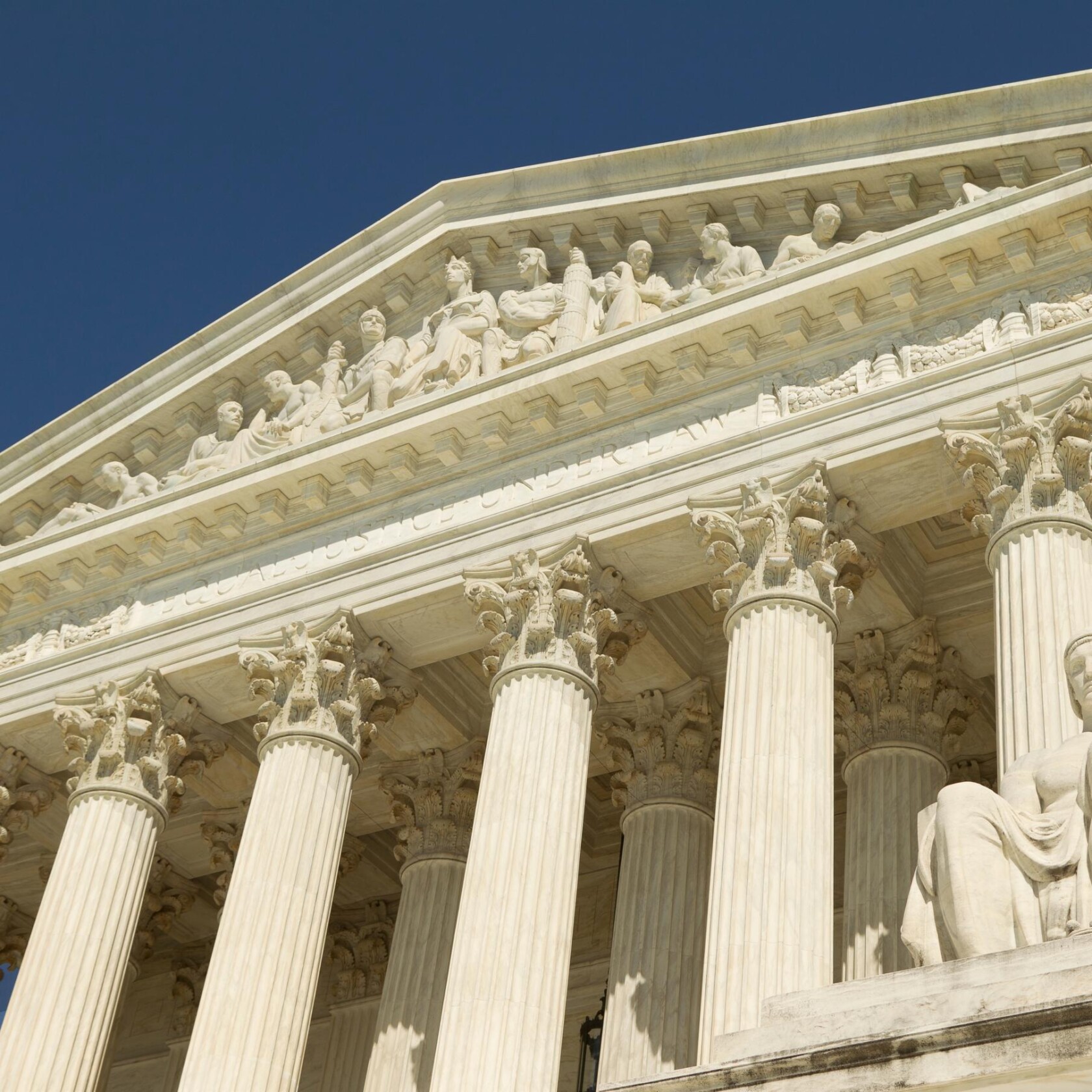
On May 28, 2026, the Supreme Court issued a unanimous opinion in Flowers Foods, Inc. v. Brock regarding the “transportation worker” exemption in Section 1 of the Federal Arbitration Act (FAA). The FAA generally requires that courts enforce private arbitration agreements. But under the transportation worker exemption, the FAA excludes from that mandate any disputes involving the “contracts of employment” of any class of workers “engaged in . . . interstate commerce.”
Considering Brock was the Supreme Court’s third case in six years on the transportation worker exemption — an unusual frequency for the Court — many (including these authors) had hoped the Court would use the case as an opportunity to create clearer parameters for lower courts to determine how to assess whether a class of workers falls within the supposedly narrow transportation worker exemption. Instead, the Brock opinion is more noteworthy for what it does not do than for what it does do.
First, some context. The Supreme Court’s prior transportation-worker-exemption cases, namely Southwest Airlines Co. v. Saxon and Bissonnette v. LePage Bakeries Park St., LLC, established that a worker must play a direct, necessary, and active role in the flow of interstate goods for the exemption to apply. Courts have struggled, however, in understanding what constitutes direct, necessary, and active involvement, especially for workers who do not physically transport goods themselves. Some lower courts have interpreted the phrase broadly, which has resulted in a wide and often unpredictable expansion of the transportation worker exemption. For example, the Ninth Circuit, in Ortiz v. Randstad Inhouse Services, LLC, applied the exemption to warehouse workers who select and move products within a single facility. In Lopez v. Aircraft Service Int’l, Inc., the Ninth Circuit applied the exemption to workers who never touch cargo but merely fuel aircraft before the aircraft are used to transport cargo and passengers.
Against this backdrop, Brock offered the Supreme Court the opportunity to help lower courts struggling with the Court’s earlier language.
The Brock case asked whether Angelo Brock, a so-called “last-mile driver” for distributor Flower Foods, was engaged in “interstate commerce” sufficient to invoke the transportation worker exemption. “Last-mile driver” is shorthand for someone who either (a) drives a vehicle in the intrastate transportation of goods on the final leg of an interstate journey but does not cross state lines or (b) interacts with a vehicle that crossed state lines by loading or unloading goods directly onto or from the vehicle. Flower Foods argued that a worker must either cross state lines while transporting goods or touch a car (i.e., load goods onto or unload goods off of) a car that crossed state lines to qualify for the exemption from arbitration. And many of us who followed the case (and disclaimer: these authors filed an amicus brief with the Supreme Court pushing for clear boundaries) hoped the Supreme Court’s Brock opinion would offer broader guidance on how to interpret and apply the transportation worker exemption generally — and not just with respect to “last-mile drivers.” But the Court’s opinion is narrow, short, and provides little (if any) guidance beyond the context of a last-mile-driver.
The Brock opinion focused solely on the interstate versus intrastate nature of a last-mile driver’s work. The Court did not use Brock as an opportunity to clarify what “direct,” “necessary” or “active” mean and how courts should apply those requirements when analyzing the transportation worker exemption. The Court held only that last-mile drivers such as Brock, who transport goods on an intrastate leg of an interstate journey, can qualify for the transportation worker exemption without crossing state lines or interacting with vehicles that do. In so doing, the Court rejected the narrow — albeit practically easy to apply — brightline rule proposed by Flower Foods. The Court acknowledged that “sometimes” last mile drivers can qualify for the exemption but did not indicate what circumstances courts should look to with respect to this “sometimes” analysis. And the Court offered no new guidance for lower courts to consider how to apply the transportation worker analysis to classes of workers who do not themselves transport anything at all but nevertheless play a materially important role in the larger process of interstate transportation.
Brock’s narrow lane means lower courts must continue to try to discern how to answer these kinds of questions from the Supreme Court’s earlier precedents — including those noted above — which have already caused an explosion in transportation worker litigation.
Brock’s limited reach also suggests that no majority of the Supreme Court could agree on how to elaborate on the Courts precedents. At best, they could all agree the narrow test proposed by Flower Foods was too narrow and that was the path they could find to resolve the case. Unfortunately, though, without further much-needed guidance, lower courts have adopted a patchwork of balancing tests that results in expansive and inconsistent application of the exemption across circuits.
This article was prepared with the assistance of 2026 summer associate JJ Gramlich.