United States Department of Labor’s Wage and Hour Division Issues a Flurry of Opinion Letters Interpreting the FLSA and FMLA
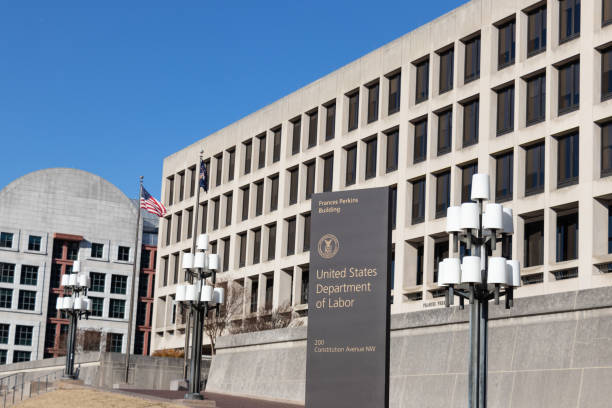
Earlier this year, the United States Department of Labor’s Wage and Hour Division (DOL) issued six opinion letters designed to, according to the DOL, “promote clarity, consistency, and transparency in the application of” the federal Fair Labor Standards Act (FLSA) and Family and Medical Leave Act (FMLA).
The letters, which we summarize below, address various pay requirements under the FLSA and also provide guidance regarding certain provisions of the FMLA.
FLSA2026-1: The FLSA’s Learned Professional Exemption
Under the FLSA, covered employers must pay employees at least the federal minimum wage for all hours worked and overtime pay of at least one-half times the employee’s regular rate of pay for all hours worked over 40 in a workweek. However, the FLSA includes many exemptions from its wage and hour requirements, including an exemption from minimum wage and overtime requirements for employees working in a “bona fide executive, administrative, or professional capacity.” In DOL Opinion Letter FLSA2026-1, the Wage and Hour Division specifically addresses the application of the “learned professional” exemption.
Generally, to meet this exemption, the employee’s “primary duty” must involve performing “work requiring advanced knowledge” that is “in a field of science or learning” which is “customarily acquired by a prolonged course of specialized intellectual instruction.” The employee must also meet the FLSA’s compensation requirements: being paid on a salary basis and earning the minimum salary threshold the DOL sets for exempt employees.
In the DOL’s letter, the agency clarifies that even if an employee meets all requirements for an FLSA exemption, including the learned professional exemption, it is the employer — not the employee — that claims said exemption. As the DOL puts it, the FLSA “does not require” employers to classify employees as exempt even though the exemption’s requirements are met, and employers may classify those employees as non-exempt so long as they are paid at least the federal minimum wage for all hours worked and the overtime premium for all work over 40 hours in a workweek. To that end, employers may choose not to classify qualified employees as exempt or only classify a subset of employees, such as “managers, particular grades or compensation levels, corporate office location, and others.”
Applying this interpretation, the DOL explained that social workers with master’s degrees who make clinical assessments, perform psychological evaluations, plan treatments, and participate in interdisciplinary care teams (among other duties) satisfy the “primary duty” test and are properly classified as exempt if they are paid on a salary basis and meet the FLSA’s minimum salary threshold. But, if the employer decides to pay the Social Worker on an hourly basis, they would not be classified as exempt because the “salary basis” requirement is not met. Therefore, the employer must classify the Social Worker as non-exempt.
FLSA2026-2: Bonus Payments
As noted above, the FLSA requires employers to pay employees at least the federal minimum wage for all hours worked and overtime pay “at a rate not less than one and one-half times the regular rate at which [the employee] is employed” to all non-exempt employees for all hours worked over 40 in a workweek. The “regular rate” includes “all remuneration for employment paid to, or on behalf of, the employee,” with certain exceptions. One of those exceptions include “discretionary” bonuses — meaning that, if a bonus qualifies as discretionary, it need not be factored into the regular rate of pay calculation for overtime purposes. However, if the bonus is non-discretionary, it must be included in the regular rate of pay.
Under the FLSA, a bonus can be excluded from the regular rate of pay calculation if (1) the fact and amount of payment is determined at the employer’s “sole discretion”; (2) the employer’s determination occurs “at or near the end of the period” when the employee’s work was performed; and (3) the payment is not made “pursuant to any prior contract, agreement, or promise causing the employee to expect such bonus payments regularly[.]”
At issue in FLSA2026-2 was whether an employer in the waste management industry was required to include payments made pursuant to a “Safety, Job Duties, and Performance” bonus plan in the regular rate of pay calculation for certain hourly, non-exempt drivers. Under the plan, the employer paid the drivers an incentive bonus that rewarded predefined punctuality, attendance, safety, and performance criteria. In the DOL’s opinion, the employer’s bonus payments were not discretionary because the fact and amount of the payments were not made at the employer’s sole discretion “at or near the end of the period” in which work is performed. Instead, the bonus was calculated using a predetermined plan to incentivize certain work performance. Because the bonus plan automatically triggered the bonus once employees met certain criteria, the DOL opined that the employer effectively “abandoned” its discretion concerning the fact and amount of the payment. Thus, the DOL concluded that the employer was required to include the bonus payments in the drivers’ regular rate of pay and recalculate overtime premiums.
FLSA2026-3: CBAs and Unpaid, 15-Minute, Pre-Shift “Roll Calls”
The question presented in DOL Opinion Letter FLSA2026-3 was whether an employer and a union could enter into a collective bargaining agreement (CBA) that requires a 15-minute “roll call” before each scheduled shift but exclude that roll call time in the overtime calculation. In the DOL’s view, the mandatory pre-shift roll call would constitute compensable hours worked and must be counted as part of the workweek of each employee who attends roll call, regardless of the number of hours the employees actually worked that week. However, the DOL opined that the employer and the union could draft the CBA to allow for a partial overtime exemption under Section 7(b)(1) or 7(b)(2) of the FLSA and, if done properly, potentially reduce or eliminate unpaid overtime liability associated with the mandatory roll call time.
FLSA2026-4: Exemption for Commissioned Employees
In this letter, the DOL addressed the overtime exemption for certain retail or service establishment employees under Section 7(i) of the FLSA. The exemption applies to employees (1) of any “retail or service establishment”; (2) whose “regular rate of pay” exceeds 1.5 times “the minimum hourly rate applicable” to them under “section 206” of Title 29 — i.e., the federal minimum wage (currently $7.25 per hour); and (3) whose compensation for a representative period of not less than one month is comprised of over 50% commissions.
At issue was, first, whether employers should use the federal minimum wage or a higher state minimum wage when the employee works in that state. The DOL concluded that the “minimum hourly wage applicable” under Section 7(i) is the federal minimum wage. However, the DOL was careful to note that employers should ensure compliance with wage and hour laws at the state and local level, as the FLSA minimum wage requirement is a “federal floor that does not preempt state or local laws.” Therefore, there could be situation in which a higher state or local minimum wage also applies.
The second issue was whether tips qualify as compensation in determining whether more than 50% of the employees’ compensation comes from commissions. In its opinion, the DOL determined that tips are generally not considered “compensation” for employment paid to the employee by or on behalf of the employer, but when employer’s use a portion of an employee’s tips towards the employer’s wage obligations for the employee (known as a “tip credit”), the tips are remitted “for employment” and thus constitute “compensation under Section 7(i).
Therefore, tips are “compensation” for purposes of Section 7(i)(2) only if the employer “in fact, relies on them to meet a federal, state, or other wage obligation with respect to the employee,” in which case the tips should be included when determining whether more than 50% of an employee’s “compensation” for a representative period represents commissions.
FMLA2026-1: School Closures and the Effect on School Employees’ FMLA Use
Aside from dealing with the FLSA provisions above, the DOL also issued two opinion letters addressing questions under the FMLA, the first of which was how school closure of less than a full week impacts the amount of FMLA leave school employees use.
In general, the FMLA entitles eligible employees of covered employers to take up to twelve (12) workweeks unpaid, job-protected leave for certain family and medical reasons, in addition to providing other benefits. Further, for employees using FMLA on an intermittent or reduced schedule basis, the FMLA prohibits reducing employees’ statutory leave entitlement “beyond the amount of leave actually taken” and when employees’ take leave for part of a workweek, the amount of leave taken is determined based on the actual week during which the leave was taken and only the amount of leave actually taken may be counted.
Thus, when an employee is approved to take FMLA leave for less than a full workweek, and the school closes for less than a week such that the employee would no longer be expected to report to work during that time, the DOL explains that the time of the school closure should not be deducted from the employee’s FMLA leave entitlement. On the other hand, if an employee uses FMLA leave for a full workweek, and the school closes for less than a week but the closure does not impact the employee’s FMLA leave usage, the employer may deduct a full week’s worth of leave from the employee’s FMLA leave entitlement. Whether the closure was planned or unplanned has no impact on the amount of leave an employee uses.
FMLA2026-2: FMLA Leave and Medical Appointment Travel
The DOL’s second opinion letter concerning the FMLA addressed whether employees can use FMLA leave for time spent traveling to and from medical appointments and whether a medical certification must specifically address the travel time associated with attending the medical appointments in order for employees FMLA leave during that time. For context, the FMLA entitles eligible employees to job protected leave for many reasons, including the employee’s “serious health condition” and to care for a qualifying family member with a serious health condition.
In reaching its conclusion, the DOL explained that, because the FMLA defines a “serious health condition” to include “inpatient care” and “continuing treatment” by health care providers, traveling to the medical provider’s location is “part and parcel of obtaining care and continuing treatment” from the provider. As a result, employees may not only take leave for the medical appointment itself but also for the time spent traveling to or from the appointment. Likewise, when eligible employees travel to or from a medical appointment as part of the employee’s “care for” a covered family member, that employee is entitled to use FMLA leave during that travel time.
While DOL opinion letters are not binding legal authority, they reflect the agency’s viewpoint and offer practical guidance for employers navigating complex wage and hour and leave issues. We will keep our readers updated as we continue following agency activity during the second Trump administration. If you have additional questions about these opinion letters or would like further guidance, please reach out to your Foley attorney.