U.S. Financial Markets Still Attractive Despite Increasing Compliance Costs
December 14, 2007
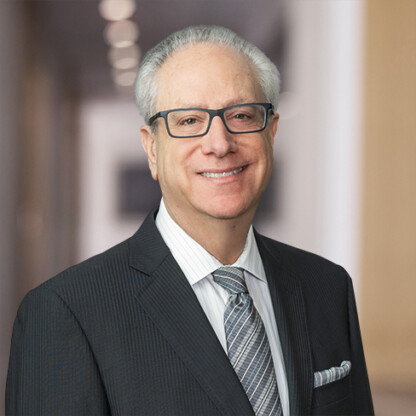
Corporate governance reform continues to impose a substantial and still growing burden on U.S. public companies. Results from Foley & Lardner’s fifth annual The Cost of Being Public in the Era of Sarbanes-Oxley study found that the average annual cost of compliance for companies with under $1 billion in annual revenue is $2.8 million – an increase of more than $1.7 million since SOX was adopted. To examine the impact of this trend, Paul Broude, Partner in Foley & Lardner’s Boston office, wrote “U.S. Financial Markets Still Attractive Despite Increasing Compliance Costs,” which appeared in the November 2007 issue of New EnglandIn-House.
Author(s)
Related Insights
March 10, 2026
The Path & The Practice
Episode 133: Casey Knapp, Partner
This episode of The Path & The Practice features a conversation with Marshall Keen, a summer associate in Foley’s Dallas office.
March 10, 2026
Tariff & International Trade Resource
What Every Multinational Should Know About…Managing the Aftermath of the Supreme Court’s IEEPA Tariff Decision (Part II)
On February 20, 2026, the U.S. Supreme Court issued its long-anticipated decisions in Learning Resources, Inc. v. Trump, and the consolidated case Trump v. V.O.S. Selections, Inc., holding that the International Emergency Economic Powers Act (IEEPA) does not authorize the President to impose broad-based tariffs.
March 10, 2026
Tariff & International Trade Resource
What Every Multinational Should Know About …Managing the Aftermath of the Supreme Court’s Historic IEEPA Tariff Decision (Part I)
The Supreme Court’s reversal of tariffs imposed pursuant to the International Emergency Economic Powers Act (IEEPA) has triggered a cascading series of events. These include a forced pivot by the Trump administration towards alternative tariff authorities, activity at the Court of International Trade (CIT) aimed at securing refunds, and behind-the-scenes jockeying by companies seeking to position themselves to claim those tariff refunds.