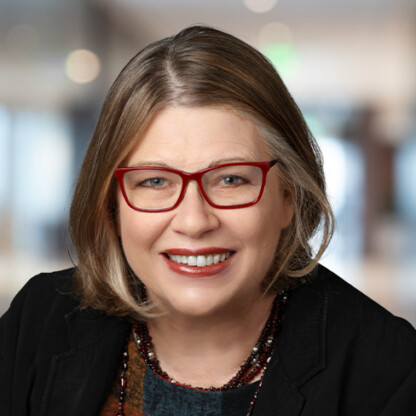
Judith Waltz Joins Health Care Roundtable – 'We all need to accept change as an opportunity'
Foley & Lardner LLP partner Judith Waltz and other California health care leaders engaged in a timely roundtable discussion covering novel challenges and innovations shaping the state’s health care landscape.
Hosted by Los Angeles Business Journal, Waltz joined executives from PIH Health and UCLA Health to touch on significant topics of interest to health care providers, companies, and patients.
Waltz emphasized that the biggest legislative impact in the near term on California health care will result from the state’s budget bill, particularly as Medi-Cal – the state’s Medicaid equivalent – is jointly funded between the state and federal government. As federal policy changes and budget cuts begin to take effect, health services are likely to experience disruption.
“As providers develop their strategies, there is an expectation that times will be tough because of budget cuts from, and other restrictions imposed by, the federal government,” Waltz explained, noting several novel operational issues providers are also working to address. “Many of those changes have just come into place through the Big Beautiful Bill, so responsive strategies are still under development.”
Waltz, chair of Foley’s Health Care Practice, described the firm’s strategic commitment to the health care and life sciences sector, including the careful steps the firm is taking in integrating new technologies to day-to-day practice and how Foley continues to invest in its people.
“As a law firm serving health care clients, we are strategically focused on acquiring, retaining, and training talent,” she commented. “These are challenging times for health care clients – and we need to have knowledgeable lawyers who know the industry inside and out so they can offer creative, proposed solutions.”
Asked how hospitals and other providers can stay competitive amid the constant evolution of the health care ecosystem, Waltz said, “We all need to accept change as an opportunity, and as part of that acceptance, learn to embrace resilience and increase our comfort with data.”
“It will be exhausting and maybe overwhelming for some people and organizations, and we will lose some of both along the way,” she concluded. “Leadership will be especially important, but we each need a plan, both individually and for our organizations, to address these challenges.”
For a full video recording of the roundtable discussion, click here. For a summary Q&A of the roundtable, click here.