Defense Production Act Determinations Could Reshape Domestic Energy and Infrastructure Strategy
On April 20, 2026, the White House issued several presidential determinations under Section 303 of the Defense Production Act (DPA) aimed at expanding domestic capability in key energy-related sectors, including the power sector. All are directed to the Secretary of Energy and rest on findings that the covered capabilities are essential to the national defense. For companies in the energy, infrastructure, manufacturing, mining, logistics, and project finance spaces, these actions may create meaningful opportunities, but also uncertainty. They do not affect or require companies to do anything directly, but their issuance may open doors to new or expanded projects or programs going forward. Below is a practical summary of what they do and what to watch for next.
Power Sector Determinations Targeting the Grid, Coal and Baseload Generation, and Large-Scale Infrastructure
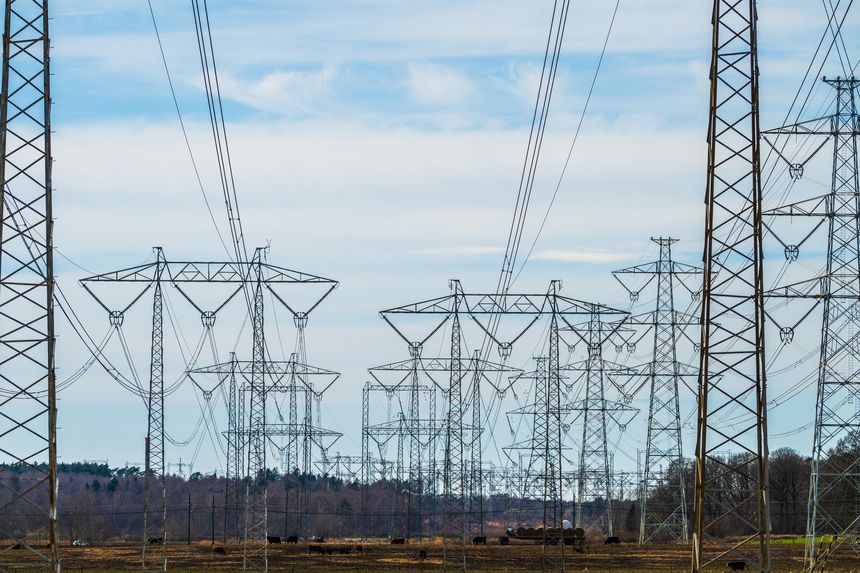
The “Grid Infrastructure, Equipment, and Supply Chain Capacity” determination covers a broad range of equipment and upstream supply-chain inputs, including transformers, transmission lines, conductors, substations, high-voltage circuit breakers, power control electronics, protective relay systems, capacitor banks, electrical core steel, and related raw materials and manufacturing tools. The Administration frames aging and constrained grid infrastructure, long production lead times, foreign supply dependence, and insufficient capital investment as defense vulnerabilities.
The “Coal Supply Chains and Baseload Power Generation Capacity” determination addresses both fuel supply chains and baseload generation capacity, including coal mining, rail and barge logistics, export and domestic terminals, generating unit availability and life-extension work, on-site stockpiles, and associated reliability updates. The Administration expressly ties coal-fired baseload power to grid resilience, defense installations, industrial expansion, and the high-energy demands of emerging technologies such as artificial intelligence.
The “Large-Scale Energy and Energy Related Infrastructure” determination is the broadest of the three determinations focused on the power sector, covering engineering, site acquisition and preparation, permitting, early-stage risk mitigation financing instruments, domestic manufacturing capacity, and enabling infrastructure. It could reach well beyond discrete equipment categories and potentially support large-scale infrastructure buildout more broadly.
Each Determination Makes the Findings Required to Support Section 303 Action
Each determination ties back to Executive Order 14156 (Declaring a National Energy Emergency), in which President Trump determined that “America’s inadequate energy production, transportation, and infrastructure constitute an unusual and extraordinary threat to the Nation’s economy, national security, and foreign policy,” and asserted that “foreign adversaries have exploited these vulnerabilities, and that an affordable and reliable domestic supply of energy, including the infrastructure needed to generate, transmit, and deliver it, is essential to ensuring United States defense readiness, economic strength, and energy independence.”
And each declares the same three core findings: that the covered resources are essential to the national defense; that U.S. industry cannot reasonably provide the needed capability promptly without presidential action; and that Section 303 tools are the most cost-effective, expedient, and practical alternative available. Each directs the Secretary of Energy to implement the determination, including by making purchases, purchase commitments, and financial instruments to enable covered projects, and by publishing the determination in the Federal Register. Each also invokes the national energy emergency declared under Executive Order 14156 and waives certain requirements under the DPA for the purpose of expanding national defense capability.
DOE Implementation Will Affect Whether These Determinations Become Meaningful
The key issue now is how DOE translates these determinations into actual programs. Companies in affected industries should watch for notices of funding opportunities, requests for information, procurement announcements, project eligibility criteria, domestic sourcing requirements, and application procedures and deadlines. DPA determinations are only as significant as the funding behind them, so open questions include what funding source DOE will use, whether enough money is already available, whether Congress will need to appropriate additional funds, and whether initial activity will be limited to a small set of pilot transactions.
Existing Frameworks, Contracts, and Oversight Could Limit How Far These Determinations Go
DPA support does not automatically displace other applicable legal and regulatory requirements. For mining-related activity in particular, prior Congressional Research Service analysis has highlighted potential consequences for public lands, water resources, and adjacent tribal communities, alongside calls for adherence to strong environmental standards and meaningful tribal consultation.[1]
Existing commercial arrangements may also warrant review. If DOE uses Section 303 purchase commitments or similar financial instruments, those tools could intersect with private contracts. Companies should examine whether their agreements adequately address output commitments, allocation of supply, and change-in-law provisions.
Beyond these existing frameworks, the determinations themselves are likely to face political and legal scrutiny, particularly those touching coal and broad infrastructure development. Prior administrations’ use of DPA Title III (Expansion of Productive Capacity and Supply) for energy-related purposes has produced similar political divisions.[2] Also watch for congressional notification and reporting tied to Section 303 actions above the statutory cost threshold, debates over appropriations to the DPA Fund, opposition tied to mining-related impacts on public lands and tribal communities, and proposed amendments in the upcoming DPA reauthorization in September 2026.[3]
DOE Implementation, Funding, and Legal Durability Will Matter More Than the Headlines
The DPA determinations are a clear next step in the White House’s effort to use Section 303 in support of domestic energy and infrastructure capacity. Their real impact, however, will depend on DOE implementation, funding, and legal durability. For now, companies should concentrate on two questions: whether their projects fit within the scope of the determinations, and how quickly DOE moves from presidential directive to executable program.
The Foley energy team will continue to track developments in this area and welcomes questions on these issues.