Telehealth is Here to Stay: New 50 State Survey of Commercial Insurance Laws Reveals Progress

Two years after Foley’s 2017 Telemedicine and Digital Health Survey uncovered a demand for telemedicine and digital health services, as well as coverage and reimbursement to match the growing demand, Foley explores how each state has responded in its 2019 50-State Telehealth Survey plus District of Columbia (DC) of Commercial Payer Statutes.
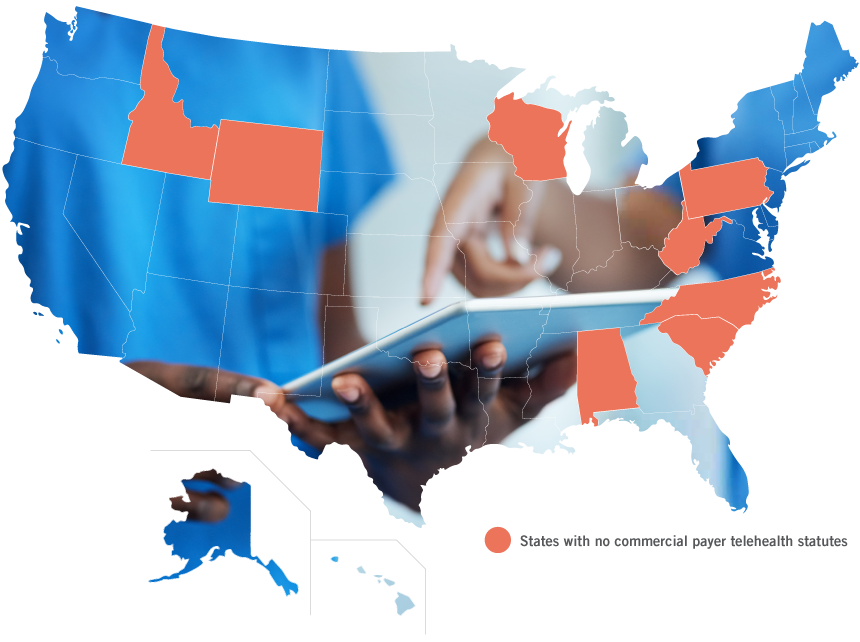
The survey found that as of October 2019, 42 states maintain some sort of telehealth commercial payer law, however several of these state laws do not actually require coverage or payment parity.
Foley’s report breaks down variances in telehealth commercial statues state-by-state, including:
- States that have commercial payer statutes in place
- States that have coverage parity or limitations
- States that have payment parity
- States that impose originating site limits
- States that have patient cost shifting protection
- State laws that address telehealth narrow or exclusive networking
- States that require coverage of reimbursement of remote patient monitoring
- States that require coverage of store & forward/asynchronous telemedicine
To read the full survey, download the 2019 report.