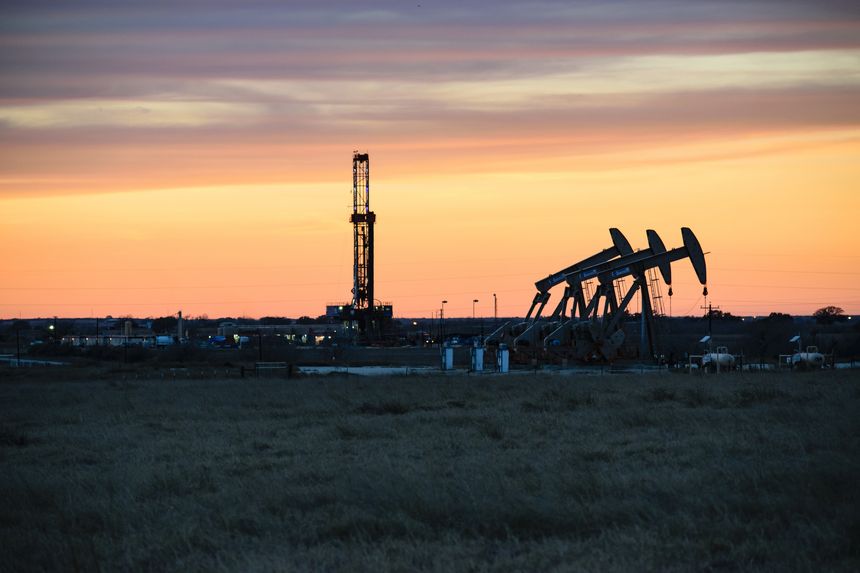
President Claudia Sheinbaum announced on April 8 a significant shift in Mexico’s energy policy by unveiling a project to exploit natural gas through hydraulic fracturing (fracking) beginning next year. This shift in policy represents a departure from the position of the previous administration, which rejected this method on environmental grounds and even attempted to constitutionally prohibit it in 2024 without success.
Mexico currently depends on natural gas imported from the United States. Of the nine billion cubic feet of gas that the country consumes daily, 75% comes is imported from Texas (80%) and California (20%). To address this situation, the Federal Government has identified the exploitation of shale gas as a solution. According to data from Pemex, Mexico has 141.5 trillion cubic feet of gas in unconventional reservoirs that require fracking, in addition to an estimated 83 trillion cubic feet in conventional reservoirs.
The three geographic areas with the greatest identified potential are: (i) the Sabinas-Burro-Picachos Basin, located in Coahuila, Nuevo León, and Tamaulipas; (ii) the Burgos Basin, in the same northeastern region of the country; and (iii) the Tampico-Misantla Basin, which spans Veracruz, San Luis Potosí, Hidalgo, and Puebla. The Burgos Basin shares the same geological formation as the “Eagle Ford Shale” field in Texas, considered one of the most productive in the world, which suggests significant production potential.
The government’s strategy contemplates a phased increase in natural gas production: from the current 2.3 billion cubic feet per day to 5.8 billion by the end of the presidential term and reaching 8.31 billion cubic feet per day by 2035, which would represent an increase of 261%. Pemex will be the entity responsible for the project, although it is acknowledged that the state-owned oil company has not previously engaged in this type of exploration.
Considering the foregoing, the opening of private sector participation in the exploitation of these resources is highly probable, given that such activity requires investment. In this regard, it is anticipated that partnership arrangements between Pemex and private companies will need to be established, primarily with recognized U.S. extraction companies in the sector located in the area of Texas comprising the Burgos Basin, due to their technological expertise in conducting fracking operations.
The legal and contractual framework under which these partnerships will be structured has not been defined; however, it is certain that, if private sector involvement is permitted, the hydrocarbon extraction intervention policies that existed in Mexico prior to the previous administration will be reinstated. The viability of these projects will depend greatly on the political will to remove the legal barriers that currently limit private sector participation in hydrocarbon extraction.
Foley is at your disposal to advise you on the analysis of these opportunities and on the structuring of investment strategies adapted to this new regulatory context.