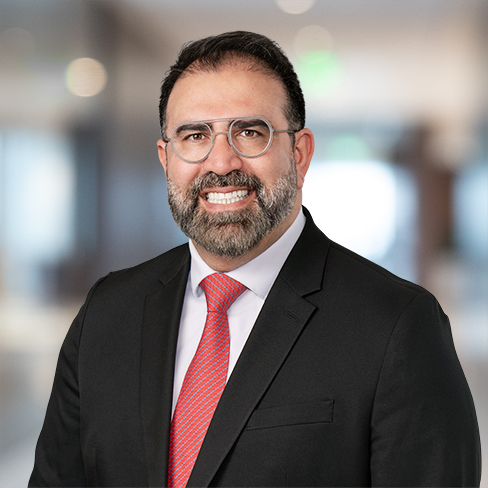
Kamyar Maserrat
Senior Counsel
Kamyar Maserrat is driven by a passion for understanding new technology and helping his clients protect their innovations. Kamyar’s invention experience spans a wide range of technologies, including artificial intelligence, machine learning, big data analytics, natural language processing, large language models, data analytics, data migration, mapping, advertising, e-commerce, and other software and business method innovations. Through the management of this diverse portfolio, he has gained considerable experience addressing issues involving the patent eligibility of software and business methods.
Kamyar is a student of burgeoning and evolving innovative technologies. This is evidenced by his recent completion of a professional education certificate in the area of quantum computing from the Massachusetts Institute of Technology.
Kamyar also serves as a trusted legal advisor to quantum computing companies at every stage of growth, from early-stage startups navigating their first patent filings to well-established industry leaders building and defending global IP portfolios. Drawing on his technical foundation in quantum computing principles and his extensive publication record through the firm’s “Beyond the Binary” series, Kamyar provides comprehensive intellectual property counsel, including patent strategy, prosecution, portfolio development, and freedom-to-operate analysis, tailored to the unique challenges of quantum hardware, algorithms, and applications. Whether guiding a founder through protecting a novel qubit architecture or counseling an established enterprise on securing foundational quantum patents before competitive windows close, Kamyar combines deep technological fluency with practical business judgment to help his clients build durable competitive advantages in this transformative field.
Before joining Foley, Kamyar was a patent attorney with IBM, where he helped protect innovations for the world’s leading patent holder. He served as an original member of IBM’s Watson focus group, working on the artificial intelligence-based system capable of using various machine learning protocols (including language models and natural language processing techniques) to reveal insights from large amounts of unstructured data. He also worked on the related Cognitive Build program, an internal incubator of projects to use Watson in new and different ways.
Awars & Recognition
- Best Lawyers® Ones to Watch – Intellectual Property Law (2025-2026)
Affiliations
- Member of Engineers Without Borders (Dallas Chapter)
- Member of Iranian American Bar Association
Presentations and Publications
- Co-author, “USPTO Publishes Revised Patent Eligibility Guidelines to Clarify Examination Under 35 USC §101” (January 8, 2019)
- Co-author, “USPTO Updates Guidance Leading to More Favorable Consideration of Patent Eligibility” (April 25, 2018)
- Co-author, “Federal Circuit Requires More Evidence Before Invalidating Patents as Ineligible Under 35 U.S.C. 101” (February 22, 2018)
- Co-author, “The Robot’s Invention: Patent Considerations in AI,” Law360 (July 9, 2018)
Languages
- Farsi

22nd Annual IP Conference
Continuing the Quantum Conversation

Quantum Is Coming – Is Your Data Ready? What the New Quantum Executive Orders Mean for Your Business
Quantum.Tech World 2026