The Data Center Boom Is Reshaping Texas — and Every Business Needs to Understand Why
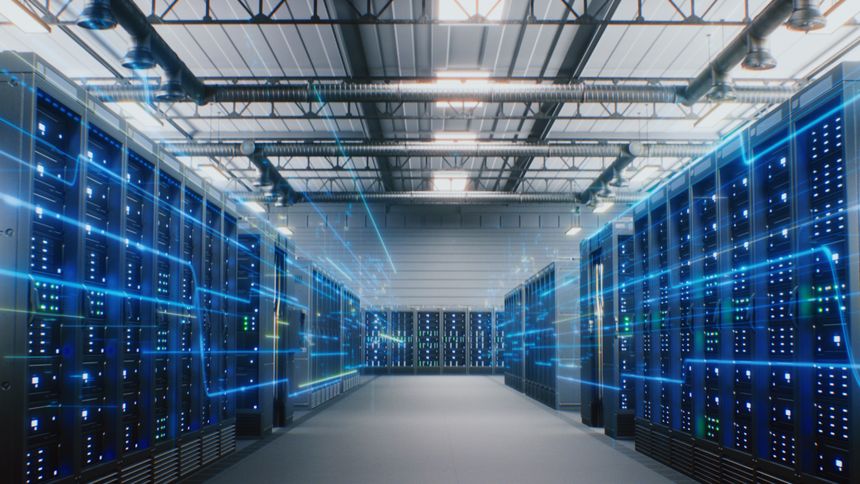
From server closets to gigawatt campuses: how digital infrastructure became one of the most consequential forces in American energy, real estate, and public policy.
Not long ago, data centers were invisible. They sat in the background of the economy — the unseen plumbing behind email, online banking, and corporate IT systems. Most executives gave them about as much thought as they gave the utility room down the hall. That era is over. Data centers have become one of the most capital-intensive, politically contested, and strategically significant industries in the country, and Texas sits near the center of it.
Understanding what is happening in the data center space — where it came from, where it stands today, and where it is headed — is no longer optional for businesses of any size. The infrastructure decisions being made right now will shape electricity prices, water availability, real estate markets, and the regulatory environment for years.
Three Eras of Data Centers
The University of Texas Bureau of Economic Geology has described the evolution of modern data centers in three phases that track closely with how technology has reshaped the economy. The first era, from roughly the 1990s through 2010, was defined by corporate IT infrastructure — internal server rooms handling email, accounting, and enterprise software. Facilities were modest by today’s standards, typically drawing kilowatts or low megawatts of power. Texas was already developing a strong presence in this period, with Dallas emerging as a natural hub due to its central geography, robust fiber infrastructure, and favorable business climate.
The second era, from 2010 to 2023, brought hyperscale computing. Amazon Web Services, Microsoft Azure, and Google Cloud transformed data centers into enormous facilities — some drawing 10 to 100 megawatts — supporting streaming, mobile computing, and software-as-a-service platforms used by billions of people. Texas became a top-tier market in this period, attracting major cloud campuses to the Dallas–Fort Worth corridor, Austin, and San Antonio.
The third era — the one we are in now — is driven by artificial intelligence. Training and running large AI models requires orders of magnitude more computing power than anything that came before. Individual facilities are now being designed to draw a gigawatt or more of electricity. To put that in perspective: one gigawatt can power roughly one million average American homes. The CEO of Aligned Data Centers, a major Dallas-based developer, has compared this moment to the early Industrial Revolution — a structural shift in the physical economy, not just a technology upgrade.
Where Texas Stands Today
The numbers are striking. As of April 2026, Texas has 84 operating data centers with a combined capacity of approximately 3,800 megawatts — and 140 additional projects in the planning pipeline that would add another 75,000 megawatts of capacity if built. According to Bloomberg Energy’s 2026 Data Center Power report, Texas is projected to exceed 40 gigawatts of capacity by 2028, representing approximately 30 percent of total U.S. demand. ERCOT’s CEO reported to Texas legislators in April that more than 2,000 projects totaling 453,000 megawatts are currently seeking to connect to the state grid, of which roughly 357,000 megawatts are potential data centers.
The drivers of Texas’s position are well-established: no state income tax, a deregulated electricity market, abundant land, strong fiber infrastructure, and a historically business-friendly regulatory environment. Vacancy rates in existing North American data centers held at a record-low 1 percent for the second consecutive year in 2025, per JLL’s year-end report, with the Texas market operating at virtually zero. Data center rents in the Americas increased 9 percent in 2025, with JLL forecasting annual rent growth of 7 percent in the Americas through 2030.
Texas is also on the verge of surpassing Northern Virginia — historically the world’s largest data center market — in new construction. JLL’s year-end 2025 report found Texas alone accounts for 6.5 gigawatts of capacity under construction, and projects Texas could overtake Virginia as the world’s largest data center market by 2030. Northern Virginia’s Loudoun County has been the global epicenter of internet infrastructure for two decades. Texas displacing it reflects both the scale of investment flowing into the state and the constraints that have emerged in established markets.
The Issues the Growth Is Creating
The scale of the buildout is generating real friction across three areas: power, water, and regulation.
On power, Goldman Sachs Research projects U.S. data center electricity demand will climb from 31 gigawatts in 2025 to 66 gigawatts by 2027. ERCOT’s own long-term forecast projects Texas grid demand could rise above 200 gigawatts before the end of the decade — nearly double the peak demand of two years ago. The Texas Legislature responded in 2025 by passing Senate Bill 6, a wide-ranging law that gives ERCOT new authority over large energy users, including the ability to curtail or remotely disconnect data centers during grid emergencies. SB 6 also requires data centers connecting after December 31, 2025 to build in remote-disconnect capabilities and mandates disclosure of on-site backup generation to ERCOT and utility partners. The Public Utility Commission of Texas is still working through the implementation rulemaking, with major portions expected throughout 2026.
Water is the less-publicized but equally serious constraint. Large data centers use significant volumes of water for cooling — evaporative cooling systems at hyperscale facilities can consume millions of gallons per day. Several Texas groundwater conservation districts have begun scrutinizing high-volume permits, and the Blanco-Pedernales Groundwater Conservation District passed a resolution in April 2026 calling for legislative action to better protect groundwater resources from large industrial users. Nationally, data center water consumption has become a flashpoint in communities that feel the local impact directly.
On regulation, states are moving fast. Moratorium bills targeting data center construction have been introduced in 11 states in 2026. Loudoun County, Virginia — the heart of the world’s largest data center market — eliminated by-right zoning for data centers in March 2025, requiring special exception approval for all new projects. South Carolina and Maryland enacted rate negotiation laws in 2025 to address how large data center loads affect electricity costs for other ratepayers. The regulatory landscape for siting, permitting, and operating a data center is materially more complex than it was three years ago.
The Global Picture — and Why It Matters to Every Business
Globally, the data center sector is in the midst of what JLL’s 2026 Global Data Center Outlook calls an “investment supercycle.” JLL estimates total data center expenditures — real estate, debt financing, and tenant infrastructure upgrades — could approach $3 trillion by 2030. The U.S. accounts for the majority of that spending, but other markets are growing rapidly. Singapore, the United Kingdom, Germany, and Japan are all major data center hubs, and investment is accelerating across Southeast Asia, the Middle East, and Latin America. The common thread everywhere is the same: AI demand is outpacing grid capacity, and the infrastructure race to close that gap is one of the most capital-intensive industrial buildouts in modern history.
For businesses that don’t build or operate data centers, this still matters in concrete ways. Electricity rates are affected when large industrial loads join a grid without proportional investment in new generation — a dynamic that Texas regulators are actively working to address through SB 6’s cost allocation provisions. Real estate markets in affected corridors are being reshaped by data center land acquisition. Water availability in fast-growing Texas counties is becoming a planning constraint that affects all users, not just data center operators. And the regulatory changes being made in response to data center growth — in zoning, permitting, utilities, and environmental policy — are creating new compliance obligations and strategic considerations across industries.
The data center boom is not a technology story that stays neatly inside the tech sector. It is an energy story, an infrastructure story, a land use story, and a public policy story — and its consequences are reaching every corner of the Texas economy and well beyond.