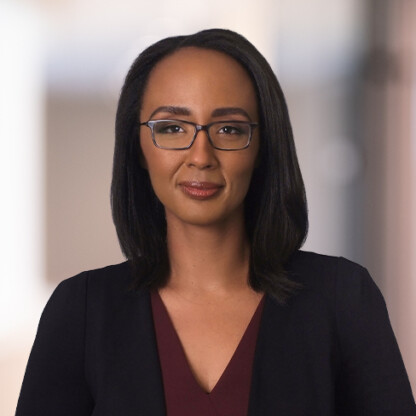
In honor of Pride Month, Foley & Lardner welcomed back PFLAG National for the sixth year in a row to help us continue to advance in our journey of allyship. This year’s virtual workshop for all firm members, titled “So What’s Next? Developing Advanced Ally Skills,” was held on June 9 and led by PFLAG Vice President of Learning & Inclusion Jamie Henkel (she/her).
Henkel set the tone by reminding attendees to treat the workshop as a safe learning space, assume we each can learn from anyone, and navigate disagreements with kindness. PFLAG Senior Manager of Learning & Inclusion Mackenzie Harte (they/them) co-presented the workshop, which included an interactive Q&A that prompted attendees to reflect on behaviors they associate with being an ally.
The workshop focused on how allies can move beyond supportive intentions and take meaningful action to create more inclusive spaces for lesbian, gay, bisexual, transgender, and queer (LGBTQ+) equality.
Henkel began by reviewing foundational terminology, including sexual orientation, gender identity, gender expression, and pronouns. She also explained the spectrum of allyship that people who want to learn more can move through to equip themselves to intervene, correct misinformation, and support the LGBTQ+ community.
“No matter where you are on this journey, there are things you can do to take action and show up for those in the LGBTQ+ community,” she said.
The central focus of the workshop was to provide strategies to help attendees close the gap between feeling like an ally and acting like an ally. “Many people want to be supportive but may experience a gap between intention and action due to lack of knowledge, tools, skills, or courage,” Harte said. They offered practical ways to model allyship in the workplace and beyond, including:
- Signal your allyship. Using appropriate terminology, inclusive pronouns, and gender-neutral language in your everyday interactions is a great place to start. Knowing these things yourself also enables you to correct unkind language or misinformation that comes up in conversation.
- Model conscious inclusion every day. How you respond (and when you remain silent) can send a powerful message to those around you. Avoid conflict by giving others grace, while still standing up for members of the LGBTQ+ community.
- Be visibly as well as vocally supportive. Visual cues like pins, accessories, and/or apparel can be helpful in creating conversation. However, remember to prepare to be a resource by being ready for conversations that are likely to occur as a result of your visible allyship, such as by having your own ally story to share.
- Get involved. Join groups and programs designed to create a sense of belonging. Take time to educate yourself on the issues facing the communities with which you are allied and support the organizations doing good work on their behalf.
The session closed with an important reminder: it is a privilege to be able to avoid conversations about gender identity, sexual orientation, and LGBTQ+ issues. Active allyship means recognizing that privilege and still choosing to advocate for inclusion, safety, dignity, and respect.
This timely program was presented by Foley’s LGBTQIA+ & Allies Affinity Group to help us navigate this more difficult environment and honor the views of those we may disagree with. Follow the link to learn more about Diversity, Equity, & Inclusion at the firm.