



Auto AI Moves from Pilot to Production: Governance, Liability, and Contracting in 2026
Key Takeaways
- AI is moving from pilot projects to core automotive infrastructure. Manufacturers and suppliers are increasingly deploying AI across vehicle development, manufacturing, quality control, predictive maintenance, software-defined vehicles, and in-vehicle systems, with autonomous AI agents beginning to make decisions previously reserved for humans.
- Greater autonomy brings greater legal and operational exposure. As AI systems take on more consequential decisions, companies must navigate product liability, negligence and warranty risks alongside emerging AI-specific laws, automotive regulations, and supply-chain requirements.
- Automotive companies should establish clear AI accountability, inventory and risk-tier their systems, maintain human oversight, test before deployment, strengthen vendor and contractual protections, continuously monitor AI performance, and preserve records that allow AI-driven decisions to be reconstructed.
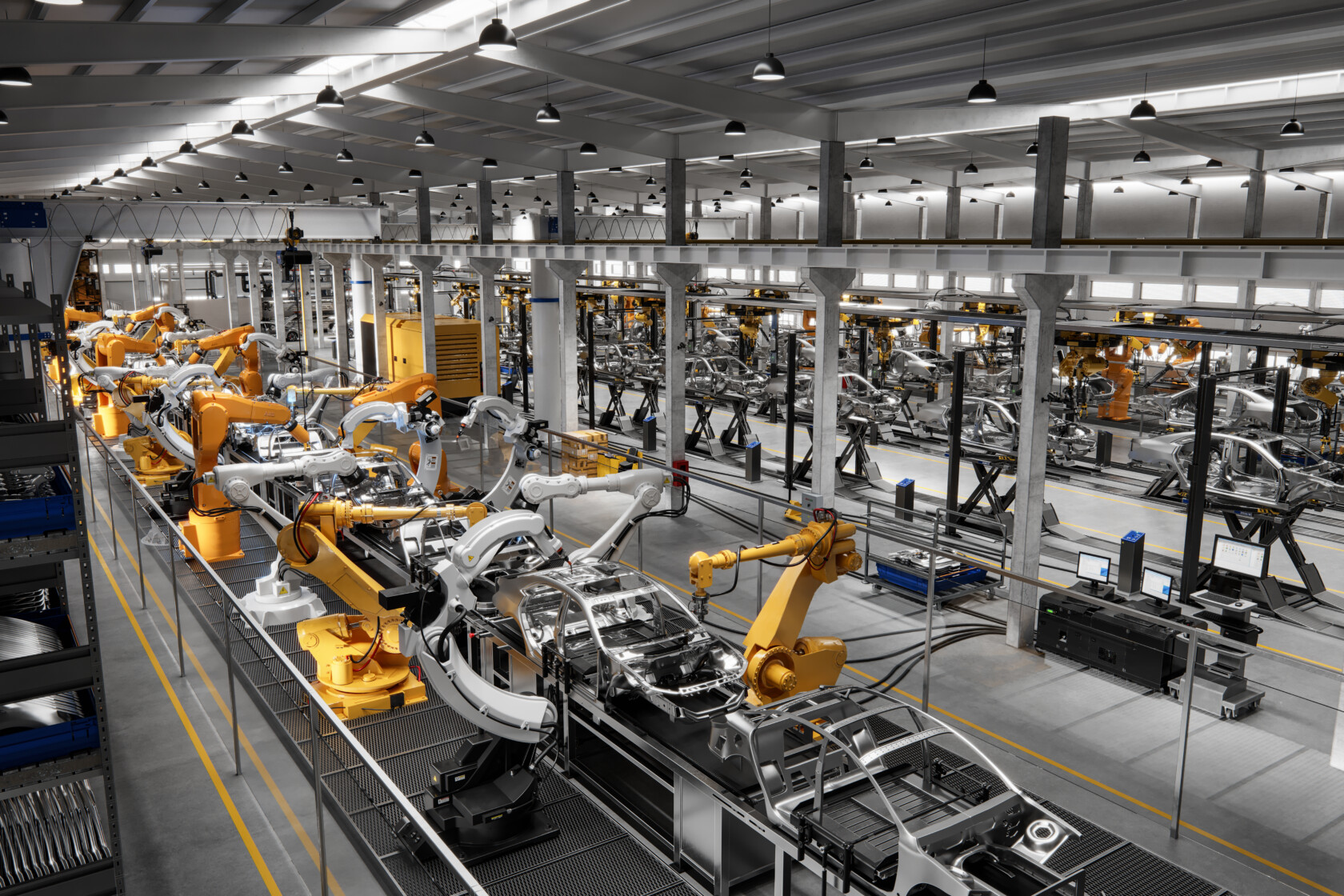
Walk the floor of a modern automotive plant in 2026 and artificial intelligence (AI) is everywhere, even where it is not visible. It inspects welds, schedules production, monitors equipment for failure, writes and reviews vehicle code, and increasingly talks to drivers from the dashboard. What began as carefully bounded pilots has become production infrastructure. For automotive manufacturers and suppliers, the question is no longer whether to deploy AI, but how to govern it, contract for it, and allocate liability when it fails.
This article traces how automotive AI has matured from experimental tools into autonomous, production-scale systems, surveys the use cases driving that shift, maps the legal and operational risk landscape, and offers practical guidance on governance, contracting, and vendor diligence.
Capabilities Are Shifting
Automakers now treat AI as core operating infrastructure rather than a collection of pilot projects. GM says it is using AI, simulation, and concurrent engineering to shorten vehicle development to roughly two years and reduce physical testing.[1] BMW describes AI as an integral part of its production system, with intelligent systems at nearly every stage of production, and plans to extend agentic AI into vehicle development.[2] Horse Powertrain’s kAIros initiative pairs an “AI Factory” with digital twins and autonomous decision-making, targeting a 50% reduction in time-to-market.[3] The same maturation is visible across software-defined vehicles (SDVs), digital twins, predictive maintenance, warranty and quality analytics, and the development pipelines for advanced driver-assistance systems (ADAS) and automated driving systems (ADS).
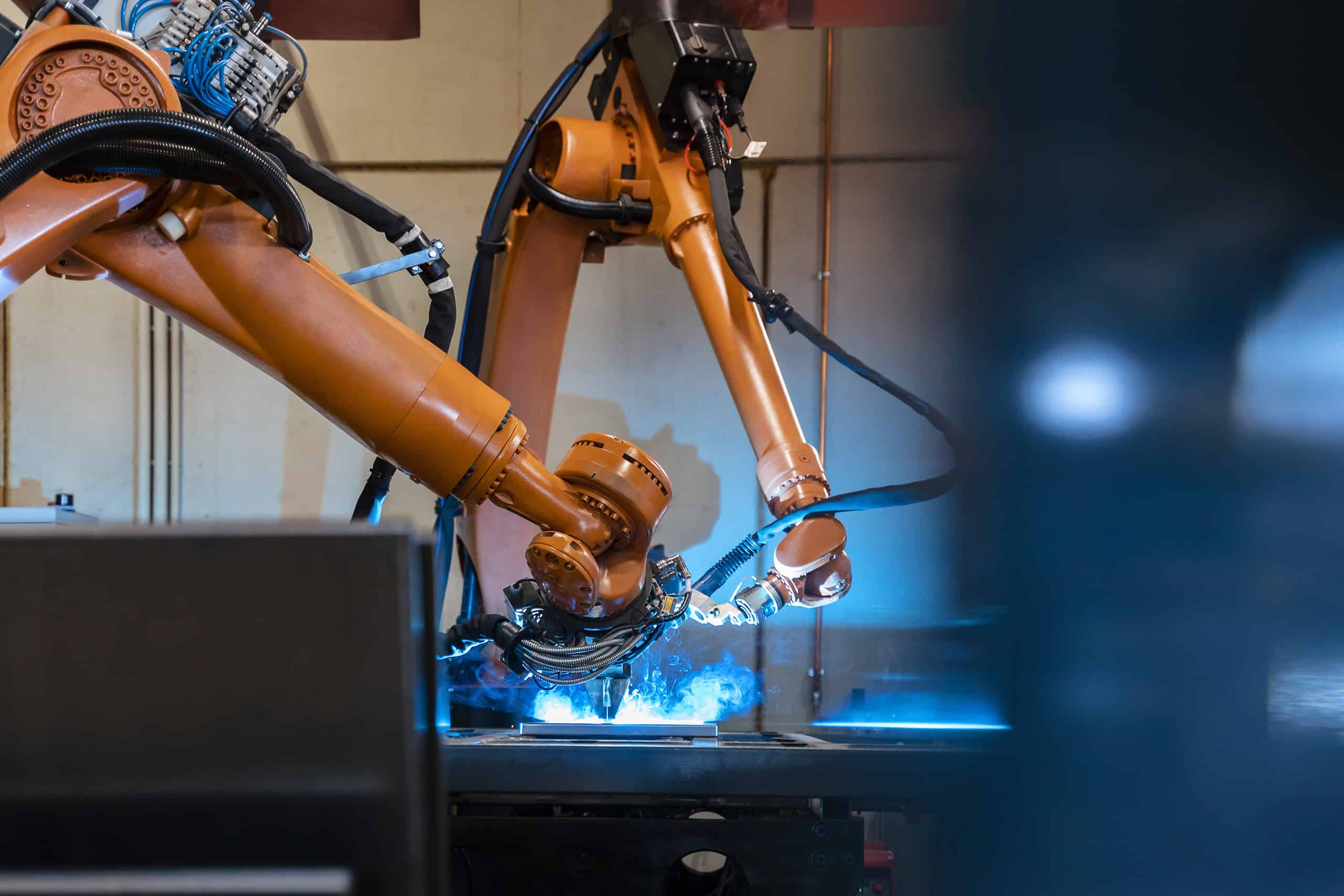
As capabilities mature, AI use cases continue to multiple across businesses. On the factory floor, digital twins are moving into production. Quality control tools can now assess every resistance spot weld in real time, and AI agents can inspect finished vehicles. Inside the vehicle, fleet data increasingly drives continuous improvement, frontier AI models are being integrated into in-vehicle assistants, and AI is being used to enhance drivability and safety.
The more consequential shift is in what AI is permitted to do. Earlier systems made recommendations for humans to act on, while the newest agentic systems act on their own. As we recently explained in Five Steps Every Manufacturer and Supply Chain Manager Should Take to Build a Scalable AI Governance Program, a predictive maintenance alert carries very different risk than a procurement agent that executes purchase orders, and governance must account for that difference.
Use Cases Are Shifting
Risks Are Shifting (and Expanding)
Law and Policy
These deployments can create legal and operational exposure at three levels.
- First, existing law already reaches AI. Long-standing doctrines apply to new technology. Product liability law asks whether an AI-driven feature was defectively designed, inadequately tested, or sold without adequate warnings about its limitations. Negligence asks whether a manufacturer or supplier exercised reasonable care in developing, validating, deploying, and monitoring the system. Express and implied warranties can attach to marketing claims and contractual representations about what an AI capability will do. And because these theories focus on conduct and outcomes rather than technology, they can follow AI into every vehicle and plant system it touches, and documented governance will often be the best evidence that a company acted responsibly.
- Second, some jurisdictions are enacting AI-specific laws. These laws typically sort AI systems by risk and impose heavier obligations on systems whose failure could cause the most harm. The EU AI Act and US state laws are the most prominent examples of this type of regulation. These types of laws classify AI by risk level, and impose obligations on developers, deployers, and providers in between. For companies operating across markets, the result is a patchwork of overlapping, shifting obligations that rewards governance programs built to adapt.
- Third, automotive-specific regulation is evolving alongside these regimes. The National Highway Traffic Safety Administration (NHTSA) has adopted and proposed a number of rules addressing the design requirements for ADS and certain ADAS-equipped vehicles. And states continue to examine and adopt rules governing the testing and deployment of autonomous commercial and passenger vehicles.
Auto Industry Risks
Industry-specific risks compound the picture. The Commerce Department’s Connected Vehicle Rule prohibits covered software linked to China or Russia beginning with model year 2027 (and covered hardware beginning with model year 2030), and requires annual Declarations of Conformity.[4] Third-party AI also raises data quality and integrity concerns because vendors update models and change data sources, often without notice. Autonomous decisions can also cascade into commercial losses. Consider a Tier 1 supplier’s AI demand-forecasting agent that acts on a flawed signal and cuts steel orders. The result could be a minimum-volume dispute, expedited freight costs, and OEM penalties. Without documented governance, the company may be unable to show what oversight was in place, reconstruct the agent’s decision, or establish whether the vendor or the deployer bears responsibility. These gaps are largely within a company’s control to close.
Building Smart Governance
To stay ahead of these trends, automotive manufacturers and suppliers should build AI governance programs around the following elements:
- Clear Accountability Channels. Establish a cross-functional AI governance committee, drawing on engineering, manufacturing, procurement, legal, compliance, cybersecurity, and product safety, with direct lines of authority and clear decision rights. To avoid bottlenecks, consider separating strategic and feasibility decisions from risk and mitigation determinations.
- AI Inventory and Risk Tiering. Maintain an inventory of every AI system in use, including vendor-supplied tools and AI embedded in plant equipment and vehicle software. Classify each system along a spectrum from advisory to fully autonomous, and scale controls accordingly. A predictive maintenance alert warrants lighter controls than an agent that executes purchase orders or a tool that validates safety-critical code.
- Update Policy Guidance. Adopt responsible AI policies, including risk classification and AI controls frameworks, that address the risks presented by agentic AI, and map them to applicable obligations, such as the EU AI Act, state AI laws, NHTSA’s Standing General Order, and the Connected Vehicle Rule, so that one program can adapt as requirements shift.
- Human Oversight and Override. Document override, escalation, and emergency shutdown protocols for each autonomous system, define when human approval is required before an agent acts, and maintain manual fallback plans for critical systems.
- Pre-Deployment Testing. Validate AI systems in digital twin and sandbox environments before production deployment and before material model updates, including over-the-air updates, so that failures surface before they reach the plant or the road.
- Contracting and Vendors. When negotiating or renewing agreements with suppliers, technology vendors, OEMs, and Tier 1s, seek liability terms that reflect actual operational risk, including indemnification, audit rights, and incident notification with defined response timelines, along with vendor disclosure of training data sources, output drivers, and testing protocols. Data quality terms should address unannounced model updates and data-source changes, and cybersecurity obligations should account for autonomous-agent risk and Connected Vehicle Rule compliance.
- Continuous Monitoring. Vendor diligence must be continuous. Because standard SOC 2 reports and generalized questionnaires are not designed to assess AI-specific risk, we recommend reassessing AI vendors at least annually, and quarterly for critical systems. Internally deployed systems should likewise be monitored for performance drift and unexpected behavior after launch.
Documentation and Decision Traceability. Keep records of approvals, testing results, oversight in place, and the inputs and actions of autonomous agents, so the company can reconstruct an AI-driven decision, allocate responsibility between vendor and deployer, and demonstrate reasonable care if a product liability, negligence, or warranty claim arises.
Automotive AI has moved from experiment to infrastructure, and oversight must now catch up. Manufacturers and suppliers that build governance, documentation, and contractual protections now will be best positioned to scale AI responsibly. Foley’s Manufacturing, Supply Chain, and Artificial Intelligence teams are available to help design AI governance programs tailored to automotive operations. Please contact the authors with any questions.
[1] Michael Wayland, “GM aims to develop vehicles in as little as two years with AI, software push,” CNBC (Oct. 21, 2026) (available at https://www.cnbc.com/2026/10/21/gm-vehicle-development-ai-software.html).
[2] “Artificial Intelligence at the BMW Group,” available at https://www.bmwgroup.com/en/innovation/artificial-intelligence.html.
[3] “Horse Powertrain Launches kAIros to develop an AI Factory and expand industrial AI capabilities,” Horse (Mar. 17, 2026), available at https://news.cision.com/horse-powertrain/r/horse-powertrain-launches-kairos-to-develop-an-ai-factory-and-expand-industrial-ai-capabilities,c4322065.
[4] Securing the Information and Communications Technology and Services Supply Chain: Connected Vehicles, 90 Fed. Reg. 5360 (Jan. 16, 2025) (codified at 15 C.F.R. pt. 791, subpt. D).