DHS Expands E-Verify Status Change Report and Substantive I-9 Violations
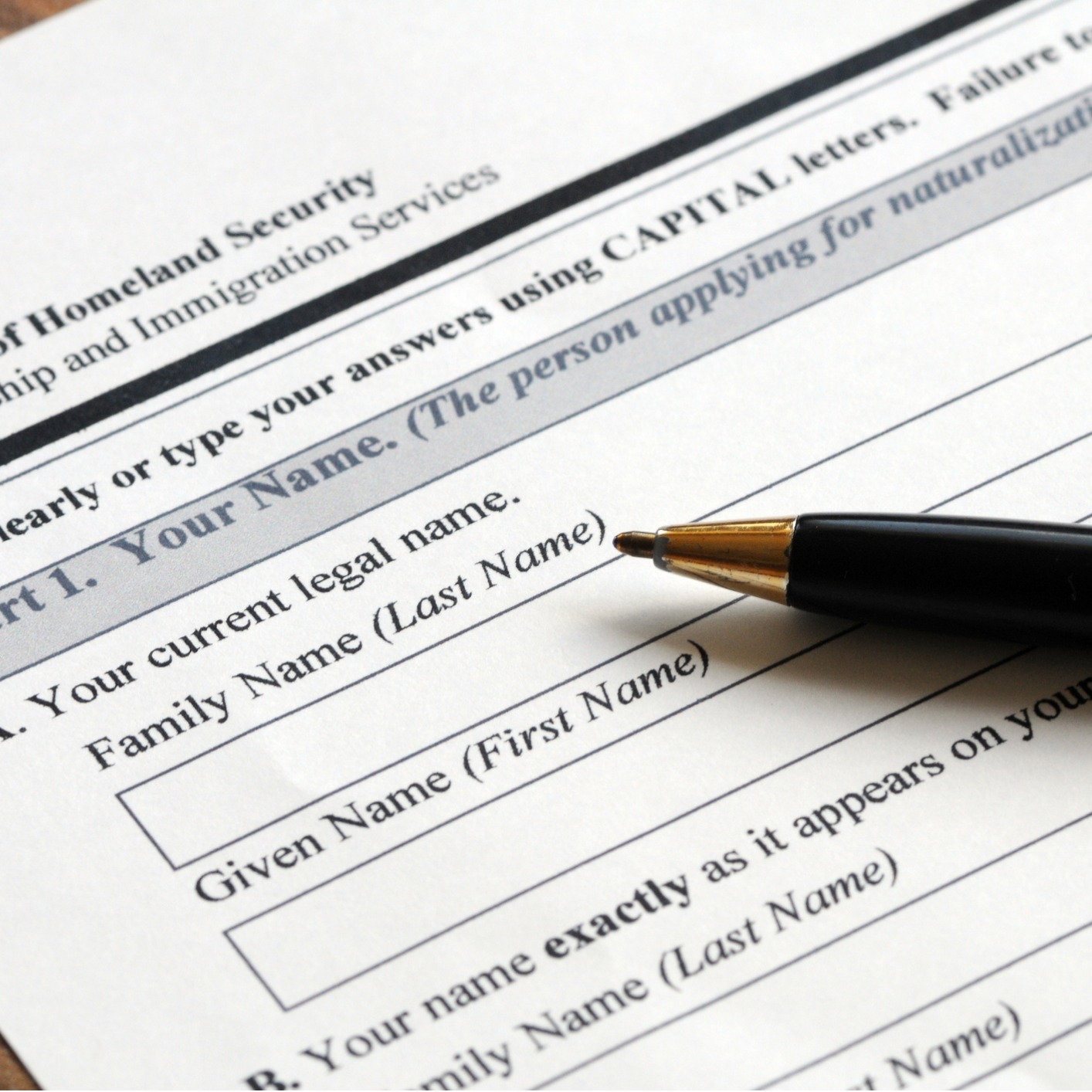
As the United States Department of Homeland Security (DHS) continues its strict enforcement of federal immigration law, DHS is sharpening the tools that it has available to encourage employer compliance. DHS recently has expanded the E-Verify Status Change Report to provide employers with additional information on the revocation of various types of temporary employment authorizations. Without action in response to this expanded report, employers are at higher risk of knowingly employing an individual who is unauthorized. In addition, DHS, through Immigration and Customs Enforcement (ICE), has expanded the types of Form I-9 deficiencies that can lead to immediate fines. I-9 fines can be substantial.
E-Verify Status Change Report Updates
As explained in a prior post, DHS created the E-Verify Status Change Report in 2025 to provide information on employees for whom certain types of temporary employment authorization have been revoked. E-Verify employers are required to review these periodic reports to confirm whether any current employee is listed. If a current employee is listed, E-Verify employees must meet with the employee and ask to reverify the Form I-9. DHS recently expanded the types of invalidated temporary employment authorizations covered by the E-Verify Status Change Report. The report now covers revoked temporary employment authorizations for applicants for asylum, adjustment of status to permanent residence, and temporary protected status (TPS). The report also covers revoked temporary employment authorization for those whose TPS or parole has been terminated.
DHS is issuing an updated report roughly every two weeks. E-Verify employers must check this report regularly and complete I-9 reverifications, if needed.
I-9 Violations Expanded
When an employer fails to complete Form I-9 properly, the deficiency can be classified as (1) technical or procedural or (2) substantive. When the mistake is technical or procedural, ICE notifies the employer and allows the employer ten business days to correct. If the employer does not or cannot correct, the deficiency becomes a substantive violation. For those deficiencies that are substantive, ICE will not provide the employer with an opportunity to correct before issuing fines. In 2026, ICE updated its I-9 guidance by placing more deficiencies into the substantive column.
Expanded Substantive Violations (Previously Technical or Procedural Violations)
Violations that would likely have been treated as technical or procedural in the past, but are now substantive include the following:
General
Use of the Spanish language version of Form I-9 outside of Puerto Rico
§ 1, Employee’s Section
- No date of birth
- No Alien Registration or USCIS Number after checking the Lawful Permanent Resident ground for employment authorization (box 3) (previously ICE might have treated the deficiency as technical if the information was stated in § 2)
- No Alien Registration or USCIS Number, Form I-94 Admission Number, or Foreign Passport Number after checking alien authorized to work for a temporary period (box 4) (previously ICE might have treated the deficiency as technical if the information was stated in § 2 or in the reverification section)
- No date by the employee’s signature
Although § 1 is the new hire’s statement under penalty of perjury, the employer is required to review § 1 promptly to confirm that it is complete and appears correct. An employer can be fined for certain deficiencies in § 1, including those stated above.
§ 2, Employer’s Section
- No document title, issuing authority, document number, and/or expiration date (if any) for the List A, List B, or List C document entry (previously ICE might have treated the deficiency as technical if the employer had retained good quality copies of the document with the Form I-9)
- No job title stated for the employer representative
- No date of hire
- No date of signature
Supplement A, Preparer or Translator Section
- Incomplete preparer or translator data
Supplement B (formerly § 3), Rehire and Reverification
- No date of rehire (when applicable)
- No document title, document number, and/or expiration date for a List A or List C document to show continued employment authorization (previously ICE might have treated the deficiency as technical if the employer had retained good quality copies of the document with the Form I-9)
New Substantive I-9 Violations
ICE also has provided new guidance on I-9 mistakes that the federal agency had not formally addressed as technical or substantive. ICE has clarified that the following deficiencies are substantive violations:
- Failure to state the expiration date for temporary employment authorization in § 1, box 4 (exception — new hires who hold asylum or refugee status may enter “N/A” where the date is requested)
- Failure to verify a replacement document within the ninety-day period following the employee’s presentation of a valid receipt for § 2 or Supplement B (formerly § 3)
- Failure to check the alternative procedure box in § 2 or on Supplement B if using a remote verification procedure authorized by DHS
- Failure to be an active E-Verify employer (or registered in another DHS Remote Document Examination procedure, if any) when stating that the employer is using the alternative procedure
- Failure to meet the standards for electronic I-9 completion, retention, document security, reproduction, electronic signature, and related matters (e.g., audit trails) for electronically generated or electronically stored Forms I-9
These newly characterized substantive violations are in addition to those traditionally treated by ICE as substantive.
I-9 Fines
For 2026, ICE may fine employers from $288 to $2,861 per Form I-9 for substantive violations. For knowingly employing individuals who are authorized, ICE may fine the employer from $716 to $5,724 per individual. The fines will be higher if the employer has been previously fined. The fine levels are likely to increase in 2027. With more substantive deficiencies and increased I-9 inspections, employers are at greater risk of liability.
Best Practice
- Prepare now for encountering ICE through a Notice of I-9 Inspection.
- E-Verify employers should review the Status Change Report frequently and use that information to complete timely Form I-9 reverifications when needed.
- Ensure that Human Resources or other staff who handle I-9 compliance duties are trained.
- If using electronic I-9 software, ensure that it complies with the federal rules for electronic systems and that staff understand the steps required to use the system properly.
- Use the alternative (remote) verification procedure only if an E-Verify employer in good standing.
- Complete periodic I-9 internal audits to identify mistakes and correct to the extent possible before a government inspection.
For assistance in addressing these complex I-9 and E-Verify issues, please contact your Foley & Lardner LLP employment attorney.