



Notes from a conversation about Physical AI with Touraj Parang
Last Thursday, May 28, a small room in Palo Alto stayed later than it should have, hopefully the signal that an evening worked. Mavka Capital and Foley convened the third installment of “Hard Things,” our invite-only series for the founders, investors, and builders working at the frontier of physical AI. The conversation, moderated by my partner in this series Vitaly Golomb of Mavka Capital, ran past the point where people normally start drifting toward the door. Nobody drifted.
We built Hard Things around the shift from bits to atoms, from intelligence in the cloud to intelligence embodied in machines that have to survive contact with the real world. The bits are easy to write about. The atoms are where companies break, and where the honest lessons live. So, we keep the format deliberate: no stage, no deck, just one operator in a room with people who build.
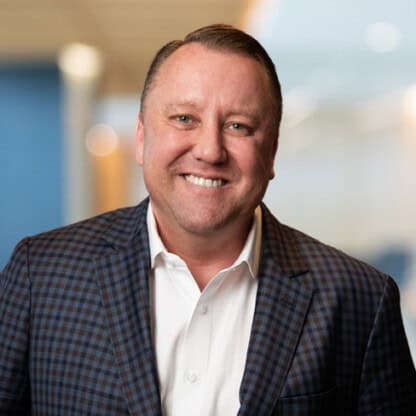
Our most recent guest was Touraj Parang, COO of Serve Robotics and an advisor to Pear VC. If you wanted a resumé that proves a point about physical AI, you would build his. A liberal arts thoroughbred (JD from Yale, philosophy and economics at Stanford) who began as a white shoe corporate attorney before crossing over to the operating side, has since lived through roughly 300 venture rejections, a bank account that once hit $6,000 against a six-figure monthly burn, a spinout from Uber, a Nasdaq listing, and a fleet of more than two thousand sidewalk robots scaling across big downtown metropolises. He also wrote the book on the subject most founders avoid: Exit Path: How to Win the Startup End Game (McGraw Hill, 2022). At Hard Things, Touraj did not show up with a thesis to sell. He arrived with scar tissue, the only credential I trust in this category. Here is what he told the room.
Go where you have insight, not where the capital is going
This is the lesson founders most need to hear in 2026 and are least equipped to act on, because the pull of capital is loud. When a sector gets hot, money floods in and founders rush to stand where it lands, but, as Touraj put it, proximity to capital is not proximity to a business. The best physical AI companies are founded not by people who noticed physical AI was funded, but by people who possess proprietary knowledge of an industry, see the operational seam outsiders cannot, and then go looking for the technology to exploit it.
His own seam was specific. Because Serve was born inside Postmates, the team could see the food-delivery data directly, and it told them something the market had not priced: roughly half of all U.S. deliveries cover a median distance of about two and a half miles (short enough for a sidewalk robot, in a market of millions of deliveries a day). Three trends were bending the right way at once, from falling hardware cost, rising AI capability, to ubiquitous connectivity, against a rising cost of labor. The pitch reduced to a line he still uses: why move a two-pound burrito in a two-ton car. He showed that same picture to the VCs, and most found reasons to doubt it. The insight was not that the opportunity existed; it was that he could see, from inside the data, that the conditions had arrived.
In hardware, strategic capital beats venture capital
I have spent a career on the financing side of this question, and Touraj’s argument here is not against venture capital, it is about fit. Traditional venture is built for software economics: low marginal cost, fast iteration, a return profile that tolerates a portfolio of zeros. Hardware is capital-intensive, its cycles measured against the physical world, its timelines indifferent to a fund’s clock. He was direct about why the VCs balked: robotics needs a lot of money, and the fear that turned them off was the cram-down (fund this round, then watch the larger rounds the hardware demands wash you out). Strategic backers like Nvidia and Uber carried the day instead, and in his telling that validation is part of what made going public possible at all.
A well-structured strategic deal, he argued, answers what venture cannot: patient capital that does not panic when the next milestone is a manufacturing problem, industry validation worth more than the money attached to it, and customer access – the hardest thing for a hardware startup to manufacture on its own. He also took on the old worry that one strategic investor taints you with every other partner and acquirer. Mostly overblown, he thinks: Uber sits on Serve’s board, and Serve still struck a delivery partnership with DoorDash. You can do that, but, he was clear, only if the deal is structured so you do not give away what would make those future moves impossible. The governance rights, change-of-control terms, and rights of first refusal that quietly decide who you may sell to in four years have to be negotiated with the eventual exit already in view.
The unconventional road to Nasdaq
Vitaly asked Touraj directly about the going-public story and, in the room, first framed it as a SPAC. Touraj’s correction is worth keeping. What Serve did was an alternative public offering, not a SPAC. In a SPAC, retail investors put money into a blind-pool shell that then hunts for a company to buy. An APO is the sober cousin: you merge into a clean shell, public-reporting, but with no operations and no public retail investors, bring accredited investors in alongside you, then uplist from the OTC market to Nasdaq through an underwritten offering. Serve traded over the counter while it built the operating history an exchange demands, then uplisted, where it trades today as SERV. One detail surprised the room: Serve was essentially pre-revenue when it listed, you can qualify on an enterprise-value test rather than a revenue test, alongside a per-share price threshold and a roughly $40 million underwritten offering.
His verdict on the path was simple: a good journey. The conventional wisdom treats the reverse-merger-and-uplist route as the consolation prize; Touraj reframed it as a deliberate choice, a way for a capital-intensive company to reach the public markets on its own timeline and uplist from operating strength rather than betting everything on a single pricing window. For the right company at the right stage, the unconventional road is the better road. That is exactly the kind of thing Hard Things exists to surface.
The moat is the operator who survives
This was the line that quieted the room. In a category obsessed with models and hardware, Touraj argued the durable advantage is neither: the model gets commoditized and the hardware gets copied, so the real moat is the operator who survives long enough to accumulate real-world data, iterate in public, and grind through the edge cases that defeat everyone who showed up later.
The sidewalk is the lab, or, in his phrasing, truth is found on the sidewalk. You cannot simulate your way to a fleet that handles a curious dog, a stalled scooter, a crosswalk full of people who have never seen a robot. You earn that data in public, taking the failures in full view: software teams hide behind alpha and beta builds, but a sidewalk robot fails on Instagram and TikTok, where the one bad clip gets the clicks and the thousands of clean deliveries get none. His counter-stat is worth holding onto. Serve’s robots, he said, tend to be about ten times more reliable at getting an order from merchant to customer than humans.
The hardest part, in his telling, is not the models or the hardware. It is operational excellence, deploying and maintaining robots across geographies, climates, and neighborhoods that each behave differently. That is the gap between lab and field, where physical AI companies die and where the moat compounds, because the operational layer cannot be bought or copied; it has to be lived. And it gets harder with scale: as utilization rises, the corner cases stop being outliers and start deciding whether the business lives or dies, Serve is past two thousand robots, and at that count one bad incident can be lethal. A quieter discipline underneath it all: the robot has to be welcome. Serve’s machines are stroller-sized and intentionally cute, and the company rolls into a neighborhood gradually, because social acceptance, not technical capability, is often the real rate limiter.
The metric Touraj watches most is utilization, but it need not mean a single job. A Serve robot earns a delivery fee like an Uber driver, can carry advertising, generate licensable data, and run an autonomy stack the company could one day sell to other robotics firms. That logic connects to the most underappreciated part of the story: Serve is older than it looks. People assume a five-year-old spinout, but the work began roughly nine years ago inside Postmates. About eighteen months ago, with sidewalk delivery well in hand, Serve widened the aperture, acquiring into adjacent verticals, including indoor hospital robots and a kitchen-robotics business, on a data-flywheel rationale: the edge cases an indoor robot encounter sharpen the outdoor models and vice versa. His test for when to expand is one any founder can use, a new vertical should feel additive, not distracting.
Here is the legal corollary, since someone in the room has to raise it. The operator who survives long enough to accumulate proprietary operational data is also accumulating an asset that must be protected, governed, and structured as deliberately as the cap table. Whose data is it? What did your strategic partner’s agreement grant them rights to? What survives an acquisition? If the moat is the data, then the moat is also a question of contracts – the thing founders neglect right up until the moment it costs them the company.
Hire missionaries, not mercenaries
The most human part of the evening was about people. Touraj’s hiring philosophy is simple and hard to fake hire talent that is religiously passionate about the mission, because that is the talent that stays when the paycheck is in doubt. Across the roughly ten times Serve nearly went to zero – including the December the account read about $6,000 against a six-figure burn, with the founders personally on the hook for payroll – the company did not lose a single one of its sixty employees. They knew the trouble, because the team was transparent, and they stayed. His advice to anyone worried it is too late to build a team: it is never too late, AI tooling means fewer people do far more, and the people you want would take a pay cut for something that resonates with their life’s mission – even people happy at an Anthropic or OpenAI today.
Hard Things exists because the polished version of these stories is useless to the people living them. The polished version of Serve is a Nasdaq listing and a growing fleet. The useful version is 300 rejections, a December with $6,000 in the bank, an unconventional road to the public markets, sixty people who refused to leave, and the truth that the winner is often just the operator who survived long enough to learn what the lab could never teach.
My thanks to Touraj Parang for giving the room something real and being generous with the parts most people edit out. My thanks as well to Vitaly Golomb of Mavka Capital, who organized the evening and moderated the conversation with the kind of questions that get an operator to drop the script, and to Kate Golomb and the teams behind the series. Round Four is coming.