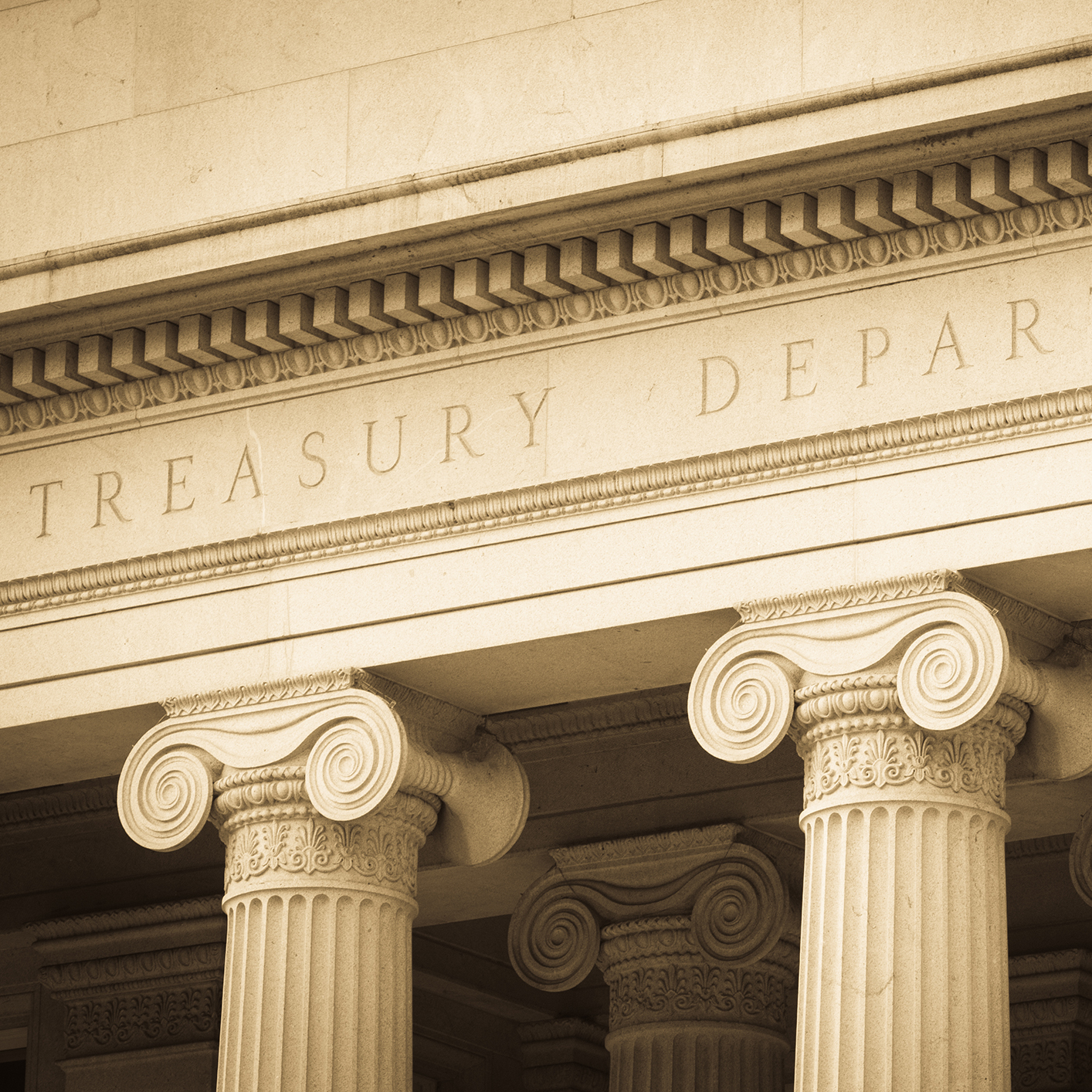
On July 7, 2026, the U.S. Department of Treasury’s Office of Foreign Assets Control (OFAC) revoked its recent rollback of sanctions against Iran with the issuance of General License X1 (GL X1).
On June 21, 2026, OFAC issued General License X (GL X), temporarily authorizing transactions involving Iranian-origin crude oil, petrochemical products, and petroleum products that would otherwise be prohibited under existing U.S. sanctions programs.1 This development represented one of the most significant, albeit temporary, reversals of U.S. policy towards Iran’s energy sector in the past four decades. Although GL X was originally effective through August 21, 2026, the issuance of GL X1 replaces GL X in its entirety, calling for the “revocation and wind down of June 21, 2026, authorization for the production, delivery and sale of crude oil, petrochemical products, and petroleum products of Iranian origin.”2
Background on Iranian Sanctions3
Since 1979, Iran has become one of the most comprehensively sanctioned countries by the United States, with most sanctions largely targeting Iran’s energy and oil sectors. Notably, such efforts expanded beyond U.S. borders in 1996 with the Iranian Sanctions Act, which allowed for the penalization in the form of secondary sanctions against foreign entities that made significant investments in Iran’s energy sector.
Recent relaxation
After decades of continuous pressure and mounting restrictions, the late 2010s saw efforts toward easing long-standing sanctions. The interim Joint Plan of Action (JPA), lasting from 2014–2016, called for a short-term freeze of Iran’s nuclear program in exchange for decreased economic sanctions on Iran, including relief related to Iran’s crude oil sales.4 The signing of the 2015 Joint Comprehensive Plan of Action (JCPOA) further relaxed U.S. sanctions, removing secondary sanctions targeting Iran’s oil exports in exchange for Iranian commitments to further restrict its nuclear program.
Return to confrontation
The relaxing of sanctions brought by the JPA and JCPOA ended when President Trump announced in May 2018 that the United States would terminate its participation in JCPOA and reimpose sanctions. Consistent with this stance, in 2025, President Trump signed the National Security Presidential Memorandum (NSPM-2), which promised to restore “maximum economic pressure” on Iran.
So far, 2026 has seen a rapid sequence of developments, with mounting sanctions levied against Iran’s shadow fleet of vessels that include a network of tankers and shell companies that secretly transport sanctioned Iranian crude oil and shadow banking network designed to facilitate the sale of sanctioned oil and petrochemicals much in the same fashion. In May 2026, the United States again broadened its sanctions, targeting companies and individuals in China and the Middle East that facilitate the flow of Iranian oil to China.
It is against this backdrop of escalating restrictions that GL X entered a significant reversal of sanctions on Iranian oil before it was revoked just a few weeks later with GL X1.
Activity Authorized Under General License X
GL X authorized all transactions that are considered to be “ordinarily incident and necessary to the production, sale, delivery, or offloading of crude oil, petrochemical products, or petroleum products of Iranian origin,” through August 21, 2026.
The license expressly covered a wide range of activities necessary to support these transactions, including the safe docking and anchoring of vessels carrying Iranian-origin products, the preservation of crew health and safety, emergency repairs and environmental protection activities, and core maritime services such as vessel management, crewing, bunkering, piloting, registration, flagging, insurance, classification, and salvage. Significantly, the authorization extended to products produced by entities that are themselves sanctioned under certain Iran-related programs.
GL X also made two notable changes that diverge from prior policy. First, it expressly authorized the importation into the United States of Iranian-origin crude oil, petrochemical products, and petroleum products where such imports are part of authorized sales, deliveries, or offloading activities. Second, it permitted payments owed to Iran to be made in U.S. dollar-denominated funds.
Why This Is Significant5
As arguably one of the most sweeping reversals of American oil sanctions against Iran since the 1979 Islamic Revolution, GL X was more than a routine regulatory carve-out. The license permitted Iran to sell crude oil, refined products, and petrochemicals while permitting transactions in U.S. dollars, opening the door to imports of Iranian crude and petroleum products in the United States for the first time in over four decades.
The exemption was expected to deliver billions of dollars in oil revenue for the Iranian regime, even allowing Iran to receive oil proceeds directly into its central bank, which strips away the costly shadow banking intermediaries that it had long relied on due to U.S. sanctions.
GL X1’s repeal of the sanction rollbacks came after three tankers reported being struck down by unknown projectiles near the Strait of Hormuz at the beginning of July. After oil prices fell close to their pre-war levels following GL X,6 oil prices have once again risen by more than 5% so far since the issuance of GL X1.7
Impact on U.S. Companies and Takeaways
For U.S. companies, GL X briefly created meaningful opportunities. The authorization of U.S. dollar clearing allowed Iran to receive oil proceeds more directly, reducing the transaction costs previously incurred by routing payments through shadow banking intermediaries, and lowering a longstanding barrier to participation by U.S. and dollar-dependent financial institutions. The express authorization of imports into the United States for the first time in decades opened the theoretical possibility of U.S. refiners and traders re-engaging with Iranian-origin product. The broad coverage of maritime and support services likewise created openings for shipowners, vessel managers, insurers, classification societies, and other service providers that have long avoided Iranian-linked trade.
GL X1 reverses the structure established by GL X in its entirety. As of July 7, no entity is authorized to engage in new transactions, including purchasing and loading of Iranian-origin crude oil, petrochemical products, and petroleum products.8 GL X1 provides for only a 10-day buffer period, allowing only activity “ordinarily incident and necessary” to the wind down of transactions previously permitted by GL X through July 17.
Given the foregoing, companies in the oil, logistics, and energy sectors should revaluate their approaches to Iranian oil transactions that may be been influenced by GL X. The following considerations should guide any response:9
- Immediately cease all new Iranian oil transactions. As of July 7, 2026, GL X1 bars all new transactions involving Iranian-origin crude oil, petrochemical products, and petroleum products. Companies should immediately halt any new deal activity and ensure no fresh contracts or purchase orders are initiated.
- Comply with the compressed wind-down deadline of July 17, 2026. GL X1 provides only a 10-day wind-down period through 12:01 a.m. EDUT on July 17, 2026. Companies with residual Iranian-linked cargoes, contracts, or receivables should prioritize unwinding those positions before the deadline and should not rely on any assumption that the wind-down period will be extended.
- Reevaluate payment and settlement procedures. Under GL X1, any payments to blocked persons made during the wind-down must be directed into blocked, interest-bearing accounts located in the United States. This reverses GL X’s authorization of direct U.S. dollar-denominated payments. Financial institutions should immediately review open payment flows and ensure that any remaining payments comply with the blocked-account requirement.
- Document compliance and prepare for continued volatility. GL X1’s abrupt reversal of GL X underscores the speed at which U.S. sanctions policy toward Iran can shift. Companies should maintain thorough documentation of all transactions conducted under GL X and the GL X1 wind-down period, closely monitor OFAC guidance for further developments, and build compliance frameworks that can adapt quickly to potential future changes in policy direction.
Foley’s team of experienced trade and national security attorneys advises U.S. and multinational companies on sanctions compliance, export controls, and other regulatory issues affecting cross border operations, including in the energy sector. To discuss how Foley & Lardner LLP can assist with navigating General License X and related sanctions compliance, please contact Jack Korba ([email protected]) Olivia Singelmann ([email protected]), or Teresa Taylor ([email protected]).
This article was prepared with the assistance of 2026 summer associate Olivia Sanford.
- GL X ↩︎
- GL X1 ↩︎
- Atlantic Council; Peterson Institute for International Economics ↩︎
- OFAC Guidance relating to the continuation of certain temporary sanctions relief pursuant to the JPOA prior to implementation of the JCPOA ↩︎
- CNBC; World Oil ↩︎
- BBC – Dozens of ships head through Strait of Hormuz after US-Iran deal; UPI News – Oil close to pre-war price as Iran oil hits market; BBC – Oil price falls back to pre-Iran war levels ↩︎
- Reuters – US revokes license that authorized Iranian oil sales ↩︎
- The Deep Dive – US Treasury Revokes Iran Oil Waiver After Brief Sanctions Pause ↩︎
- GL X1; Reuters; IntelliNews; The Deep Dive ↩︎