DOJ’s National Fraud Enforcement Division Focuses on Government Program Fraud: What Recipients of Federal Funds Need to Know
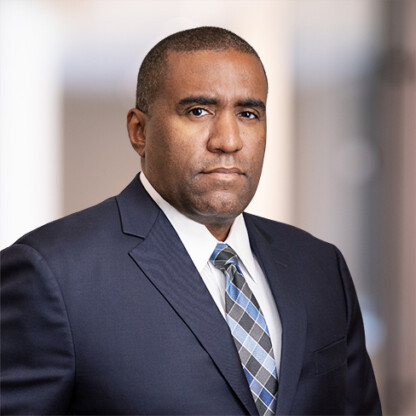
On August 13, 2026, Assistant Attorney General Colin M. McDonald issued a memorandum to all personnel of the Department of Justice’s (DOJ) newly created National Fraud Enforcement Division (the Fraud Division). The memorandum identifies five Fraud Division enforcement priority areas: (A) public trust and financial integrity; (B) health care; (C) internal revenue; (D) global trade and commerce; and (E) corporate misconduct. The implications of the memorandum on combating health care fraud were addressed in a recent Foley & Lardner article. This article focuses on the DOJ’s renewed emphasis on combating government program fraud with significant increases in manpower and data-driven resources in specific target areas, particularly those involving foreign nationals. It also addresses the precautions and compliance measures companies should initiate to prevent corporate misconduct when receiving government funds.
DOJ’s Priority on Prosecuting Fraud in Public Trusts and Grants
The DOJ has committed significant resources to combating government program fraud. These resources include an increased headcount to approximately 500 attorneys over the next two years, data-driven white collar law enforcement, and reduced bureaucratic oversight resulting in faster prosecutions. The DOJ memorandum singles out several categories of conduct under “public trust and financial integrity” for its government fraud enforcement. These categories include:
- Procurement and contracting fraud. The memorandum calls procurement fraud “a critical priority,” expressly listing “defective pricing, bid rigging, self-dealing, bribery, product substitution, and billing frauds,” and tying these schemes to national security and military readiness.
- Benefit and grant programs. The memorandum highlights programs ranging from “student loans to childcare, veterans’ benefits to nutritional supplements, and disaster relief to small business programs,” warning that “lax oversight allowed bad actors — often foreign nationals — to exploit these programs.”
- Foreign nationals and organized schemes. The memorandum emphasizes its intent to focus on foreign nationals and that fraudsters are “not just isolated actors” but form “criminal conspiracies, often spanning international borders” that exploit benefit programs.
The DOJ recently publicized its government program fraud work in coordinated fashion. For example, on July 30, 2026, the United States Attorneys for the Eastern, Middle, and Western Districts of Louisiana issued a joint announcement highlighting nine recent fraud prosecutions across the state, framing the effort as an extension of the Fraud Division’s mission. The nine cases track the DOJ memorandum’s government program fraud priorities closely, including pandemic relief fraud under the Paycheck Protection Program (PPP), Economic Injury Disaster Loans (EIDL), and Employee Retention Credit government programs, among other crimes.
Yet, the DOJ’s emphasis in pursuing government program fraud is not new. In April 2025, the United States Attorneys’ Office for the Central District of California in Los Angeles announced the formation of a Homelessness Fraud and Corruption Task Force to investigate “fraud, waste, abuse, and corruption involving funds allocated toward the eradication of homelessness.” The announcement noted the Task Force would “prioritize a review of federal, state, and local programs receiving federal grants and funding,” including private donations intended for the homeless population. As a result, government grant recipients and their subrecipients (nonprofits, service providers, and developers alike) can assume that receipt of federal program dollars carries federal audit and enforcement consequences downstream.
What This Means for Organizations That Receive Government Funds
Analyze and audit your own data before the government does. If the DOJ is investing in data science, recipients of federal funds should too. Test the claims, invoices, cost reports, performance metrics, and drawdown requests the company submits to the government for outliers, statistical anomalies, and patterns that could look suspicious to a government analyst. If those audits identify potential issues, evaluate whether and when to make a self-disclosure to the government.
Assess the company’s workforce and customer base. Immigration compliance should be part of fraud risk management, as both a policy and a practical matter. The DOJ memorandum’s emphasis on schemes that “prey on the vulnerable” and on wrongdoing by foreign nationals directly signals heightened scrutiny of organizations serving children, the elderly, and the sick or disabled, and of workforce composition, particularly at companies that employ foreign nationals. Companies would be best served by confirming that their employment practices, such as contractor and staffing-agency arrangements, and work-eligibility verification procedures, such as I-9 collection and retention, are current and auditable.
Build tax into internal investigations. The memorandum states that “many fraudsters who steal money from government programs . . . simultaneously violate our internal revenue laws,” and promises “intra-division and interagency coordination” to enable an “all-tools response.” Companies should conduct an internal investigation to identify any questionable revenue, unreported income, or improper deductions. This revenue and tax analysis should begin as soon as practicable and not after a government investigation has ensued.
Reassess compliance against the government’s stated priorities. Compliance programs should be mapped against the specific conduct the DOJ memorandum identifies. Under the DOJ’s Corporate Enforcement and Voluntary Self-Disclosure Policy (CEP), “timely and appropriate remediation” requires, among other things, a documented root cause analysis, an effective compliance and ethics program, appropriate discipline of responsible employees and their supervisors, and controls on other practices that may undermine record retention. A company’s proactive remediation before a government investigation ensues is cheaper, more controllable, and likely to be perceived by the government as more credible than any post-investigation response.
Bottom Line
The Fraud Division memorandum indicates that more resources are being dedicated to combating fraud. More prosecutors, data-driven investigations, and specialized prosecutorial sections likely translate into earlier fraud detection and faster charging decisions, particularly for organizations whose revenue flows from federal government programs. The companies and organizations that fare best in this environment will be the ones that treat their own government-facing data as a potential audit target, integrate tax and immigration compliance into government fraud risk assessments, remediate before they are asked to do so, and make a deliberate, well-counseled decision about self-disclosure, while the choice is still theirs to make.