The Thin Line: A Conversation with Venky Ganesan at Sidebar Summit

On the opening day of SF Tech Week, I asked a room full of founders and investors at Sidebar Summit to raise a hand if they had ever been called a genius because something worked. Most hands went up. Then I asked them to keep it up if, honestly, it could have gone the other way. Almost every hand stayed up.
That is the thin line, and it was the throughline of my conversation with Venky Ganesan, Partner at Menlo Ventures. Silicon Valley grades people by outcomes. The company sold: genius. The company folded: idiot. What we do not do enough is talk about the people who walk the line between the two.
Venky has walked it more than most. He is the 15-year-old from Cochin who talked his way into a job that was not meant for him, the investor who came back from a stroke that nearly killed him in 2019, and one of the people behind the bet that defined Menlo’s 50th year: more than half a billion dollars into Anthropic in 2024, when nobody else was writing half-billion-dollar checks.
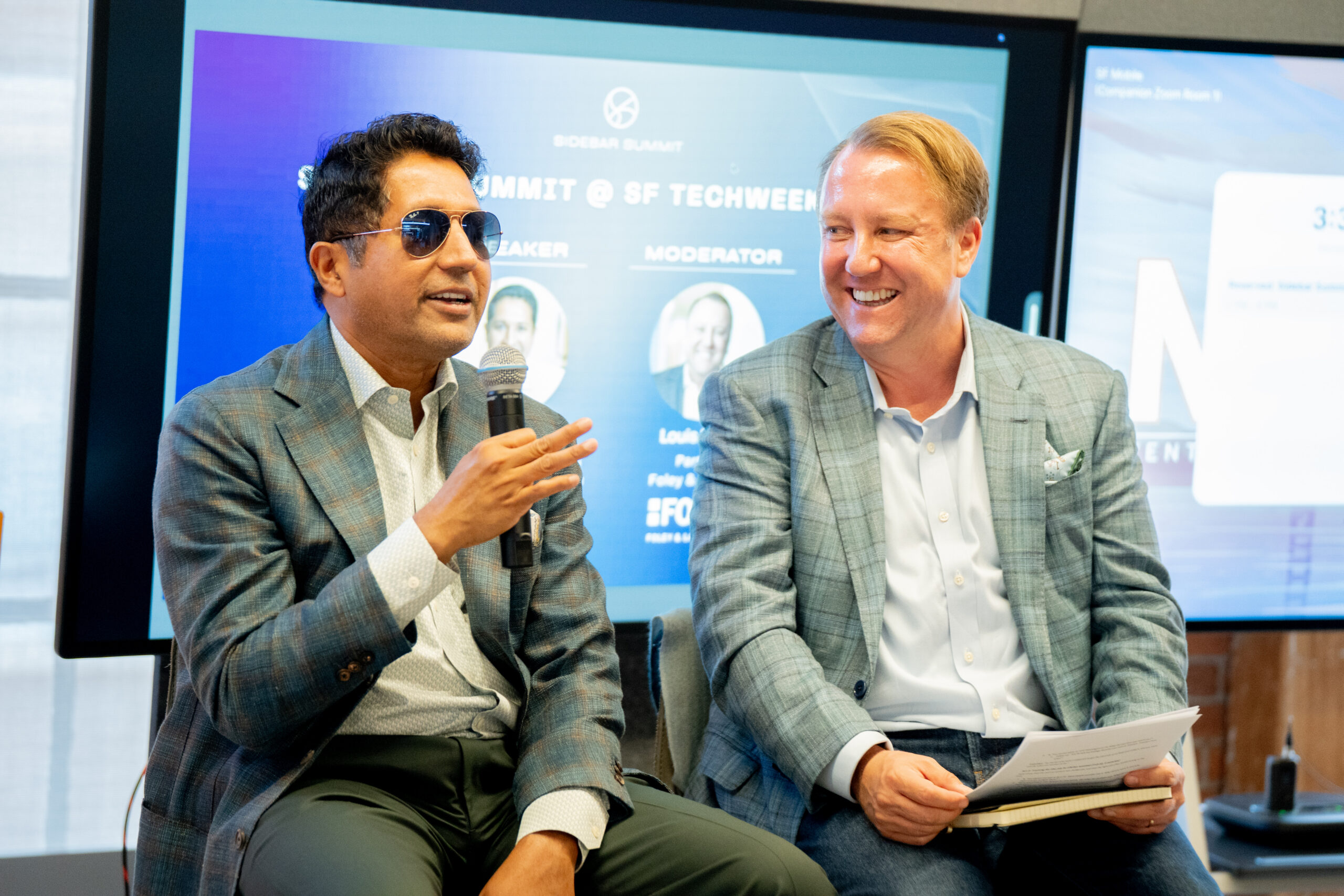
We had 45 minutes at Menlo’s San Francisco office on 2nd Street, in front of founders, investors, operators and, this being Vishal Verma’s summit, a healthy contingent from the sports business. Here is what I took away.
The kid who answered the wrong ad
Venky was born in Cochin, in Kerala, the eldest child of a father who sold radiators and a mother with what he describes as an insane belief in him. Both were optimists. It shows.
At 15, in tenth grade, he answered an ad for a sales job meant for college students and talked his way into it. At 16 he moved, alone, to rural Washington State. A scholarship took him to Reed College for mathematics and economics, then to Caltech for engineering. That first year in Washington, in his telling, is when technology became his path to freedom.
He is one of the few venture capitalists who always wanted to be one. After working as a program manager at Microsoft, he joined McKinsey in Los Angeles and Johannesburg, choosing its $39,000 salary over a much more lucrative offer. He later co-founded Trigo Technologies and sold it to IBM in 2004. A decade at Globespan Capital Partners, then Menlo Ventures in 2013, with an early check into Palo Alto Networks and a term as chair of the National Venture Capital Association along the way.
The detour was the training: build something, operate something, advise people, and learn that the right call often looks wrong at the time. Somewhere along the way he visited Robben Island, where Nelson Mandela spent 18 of his 27 years as a prisoner. What stayed with him was how Mandela received visitors there: as if he were a head of state, putting a carpet down on the floor, serving tea, and treating everyone with kindness. Dignity, it turns out, does not depend on circumstances. Keep that in mind for the last part of the conversation.
The bet-the-firm check
Menlo’s 50th year will be remembered for one decision. The firm first backed Anthropic in 2023, before the company had a product or revenue, then led the 2024 Series D with a check of more than $500 million. On June 23 of this year Menlo announced $3 billion in fresh capital, the largest raise in its history, across an early-stage fund and a growth fund, and said it is all in on AI.
Anthropic has reportedly filed confidentially for an IPO, and as a securities lawyer I was not going to be the one to get Venky in trouble. We kept this part to history and thesis: no valuation, no financials, no timing, no forecasts.
So I did not ask him to take us into the room on the day Menlo decided to write a half-billion-dollar check when nobody else was writing them, and to tell us who pushed back.
But the room was thinking, right and sized accordingly, you look like a genius. Wrong, the other thing. The thin line.
Is this 1999?
This was the heart of the conversation, so I held up a $20 bill.
The rules were simple. I would auction the twenty. Bids go up a dollar at a time, and the highest bidder wins it. One catch: the second-highest bidder pays their bid too, and gets nothing. Predictably, the bidding went past $20, and I called it off.
The exercise is a classic from Harvard’s Max Bazerman, and Venky explained that it is the best way to understand the AI spending wave. The lesson is simple. Anyone who bids under $20 and wins has made money, unless they screw up the execution. Anyone who bids over $20 and wins is guaranteed to lose money, unless they can recover with better execution. Past $20 nobody can win, and they keep bidding anyway, because stopping locks in the loss. That is the AI capex wave: hundreds of billions of dollars of data-center and GPU spending by players who cannot afford to be the one who stopped.
Then I polled the room. Hands up if it is 1997 in AI. What about 1999? 2000? 2001? At SF Tech Week, the room was optimistic. And then the question I had been building toward all afternoon. Venky, what year is it? His answer: 1995, not 1999. For those keeping score, that is the year of the Netscape IPO, with most of the boom still ahead.
His reasoning, laid out in a series of posts over the past few weeks, starts with Chuck Prince, who said in July 2007 that as long as the music is playing you have to get up and dance; weeks later, credit froze. Prices shape beliefs and beliefs shape prices, and an investor who is not on the dance floor does not see the action.
The thin line
Then we slowed down. In 2019 Venky had an ischemic stroke that nearly killed him.
What he said next was the most personal thing I have heard on a Tech Week stage. When you are not sick, you have many problems. When you are sick, you have only one problem: get healthy. Almost dying showed him what was really important, and he has spent the years since filtering out the rest.
He wanted more time with his family. So he no longer schedules work dinners, and he goes home for dinner every night unless it is really required that he does not. He measures relationships over time, and if one is sucking net energy out of him rather than infusing him with positive energy, he limits his time with it.
This is not a man who has gone soft. His point is that positive energy is a multiplier. You get much more done with it, and when things go badly you react better to a negative event from a positive place than from a negative one. Maintaining positive energy, in his words, is net impactful.
And the question the afternoon had been building toward: How do you stay humble when it goes right, and kind to yourself when it does not? He also says you should dress how you want to be seen, so I asked what he wants people to see. Judging by yesterday, the best-dressed man in venture.
Thank you
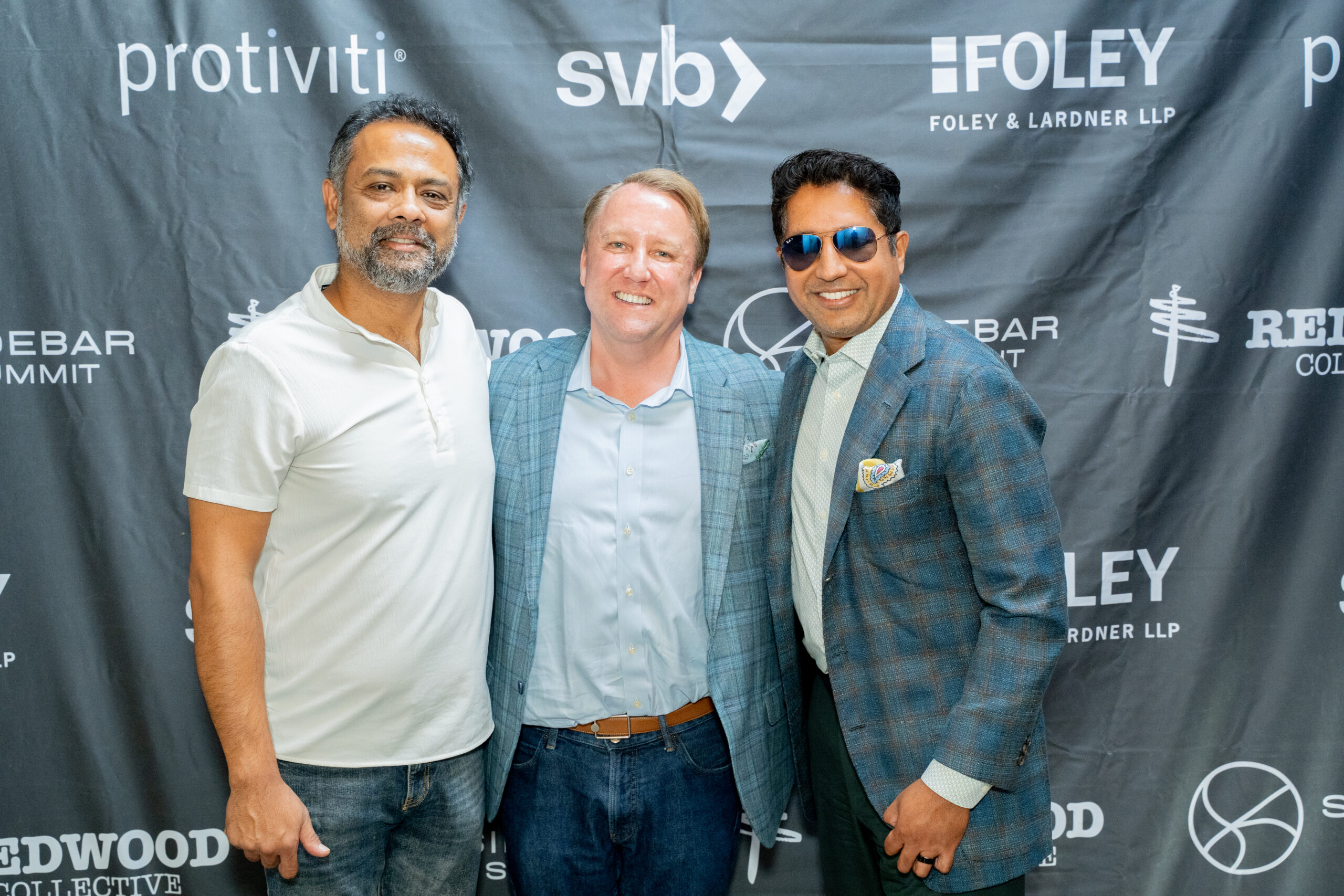
Thank you to my friend Vishal Verma for curating another Sidebar Summit, to Menlo Ventures for hosting us, and above all to Venky for saying yes to a conversation with no safe questions.
The room was the best kind of Tech Week room: investors from Celesta Capital, Dell Technologies Capital, ACME Capital, Cervin Ventures, Systemic Ventures, Capra Ventures, Xeed Ventures, Tunitas Ventures, Overlook Ventures and MaC VC; strategics from Amazon, Siemens, SVB, Wells Fargo and Protiviti; founders building Libero, Highlo, Asterlava, yourcore and A51; the San Francisco Giants’ partnerships team; and a sports-business contingent from Klutch Sports Group, Team 100 and Legacy Driven Sports.
We started with the line between success and failure. What I will remember is a 15-year-old who answered an ad that was not meant for him, a mother who believed he could, and a man who came back from a stroke to make the biggest bet of his career, and then went home for dinner. Thank you, Venky.