


Hard Things: Hardware Is Hot Again. Bet on the Boring Machine.
Key Takeaways
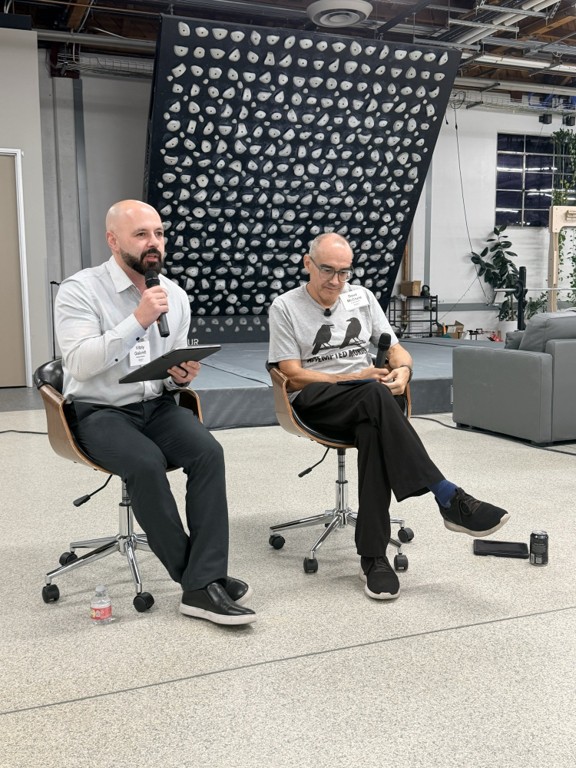
- What happened: On Nov. 2, Foley & Lardner and Mavka Capital hosted the fifth Hard Things evening at the Redwood City, Calif., offices of Helm.AI. Mavka’s Vitaly Golomb interviewed Dave McClure about investing in hardware and physical AI.
- Who is Dave McClure? An engineer turned investor and one of the most prolific seed investors of his generation. A PayPal alumnus, he founded 500 Startups in 2010, backed companies such as Twilio, Credit Karma and MakerBot, and helped build venture communities in dozens of countries. He now runs Practical Venture Capital, which buys stakes in private companies from early investors and employees. A self-described hardware skeptic, he has started making hardware investments in the past two years.
- Who is Helm.AI? One of the leading physical AI companies. Founded in 2016 by CEO Vladislav Voroninski, Helm.AI builds the AI software that helps cars drive themselves, trained on vast amounts of data without armies of human labelers. Honda is a commercial partner and investor.
- Is hardware a good bet again? Only with eyes open. Hardware is harder for AI to disrupt, but it is also hard for founders. Many investors are rushing in without pricing the risk.
- Humanoids or factory robots? The room favored a boring machine that does one paying job. Humanoids may find a niche in elder care.
- What proves a robotics business? Pilots that look alike, or a robot that works in a third setting. Better yet, one customer rolling out to more sites from its real budget.
- How do investors get paid? Slowly. Companies now take 12 to 15 years to go public, so secondary sales and company tender offers carry more of the load.
REDWOOD CITY, Calif.—For 20 years, the smart money avoided hardware. It cost too much and moved too slowly. Now hardware is in fashion again, and that is exactly when a lawyer starts reading the fine print.
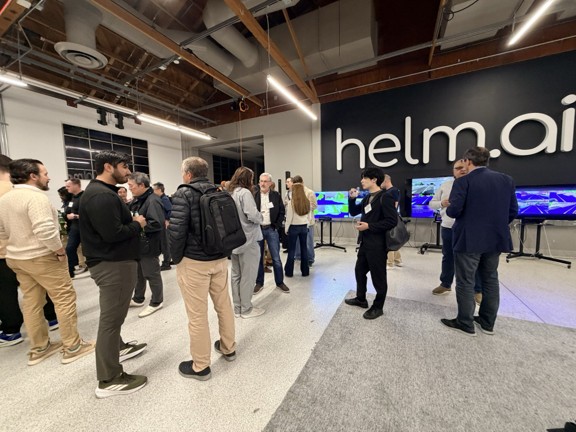
That tension drove the fifth Hard Things evening, which Foley & Lardner and Mavka Capital hosted on Nov. 2 at Helm.AI’s offices. Helm.AI was the right room for this conversation. Founded in 2016 by CEO Vladislav Voroninski, it has become one of the leading physical AI companies, building the software that helps cars drive themselves. Its approach trains driving models on huge amounts of data without armies of human labelers or a giant test fleet. Honda is both a partner and an investor, with Helm-powered driver-assist systems slated for Honda models around 2027. Our thanks to Vlad and the Helm.AI team for opening their doors. Nearly 150 people signed up. Most were early-stage founders building physical AI, from robot training data to exoskeletons to counter-drone systems. Seed investors, family offices and corporate venture teams from heavy-equipment and automotive companies joined them, with guests from as far as Finland, Sweden and Singapore.
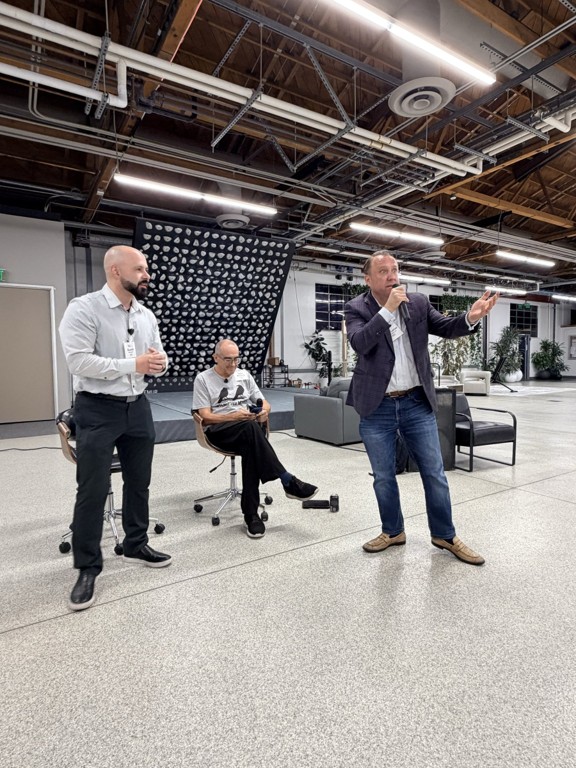
The evening centered on a fireside chat between Vitaly Golomb of Mavka Capital and Dave McClure, founder of 500 Startups and now of Practical Venture Capital. He calls himself a hardware skeptic, yet he keeps writing hardware checks.
Hard for AI, Hard for You
Why is hardware suddenly hot? Defense spending is surging. Space is booming. “Physical AI” is the phrase of the year. Underneath it all is a quieter fear: AI makes software easy to copy, so investors are looking for something harder to copy.
That logic is half right. Hardware is hard for AI to disrupt, at least today. But it is also hard for founders and investors. Building physical products still takes more money and longer cycles than software. Some costs have fallen. The risks have not gone away.
The verdict from the stage: Plenty of investors are following the herd into hardware without understanding what they are buying. Hardware’s difficulty should raise the bar for diligence, not lower it. A barrier is a moat only if your company clears it better than everyone else. Otherwise it is just an expensive obstacle the whole category shares.
Sell a Job, Not a Robot
Given the choice between a general-purpose humanoid with a huge theoretical market and a dull machine doing one profitable job, the room took the dull machine. Humanoids looked like a head fake. Factory automation looked like the real money.
The rule echoes classic software advice: Don’t force new behavior. Speed up a process customers already pay for. Humanoids may still earn a place in elder care, helping seniors in and out of bed, where labor shortages are severe. One example from the evening: a device that clips onto a hospital bed and drives patients to procedures, replacing a two-person job with a long wait list.
What turns a demo and two pilots into a business? Either the pilots look alike, or the robot can handle a third, different setting. The strongest signal is one customer adding sites and moving the spend from its innovation budget to its operating budget.
Investors should also look past adjusted margins. Remote operators, installation, maintenance and support are real costs. From where we sit, those costs belong in the customer contract and the diligence file, not in a footnote.
Shenzhen Sets the Pace
Actors go to Hollywood. AI engineers come to Silicon Valley. Hardware engineers go to Shenzhen. That was the report from a recent trip through China’s hardware hubs. There, factories run with the lights off and buildings rise in days. Three decades of infrastructure and a deep bench of engineers can’t be matched quickly.
The takeaway for reshoring was blunt. Manufacturing that returns to the U.S. will come back as robots, not as jobs. An American factory pitch makes sense where automation replaces costly labor. It is harder to defend on tariffs or subsidies alone. That leaves an open question no one in the room could answer: How fast can workers and communities adapt?
So what should a U.S. robotics founder build here and buy there? Own what customers pay for, and source the rest. Outside of defense, where security rules may require domestic supply chains, the advice was to lean on Asian manufacturing in China, Taiwan, Vietnam and beyond. Protect the designs, though. We would add: Put IP ownership, tooling rights and confidentiality in the supplier contract before the first prototype ships.
Training is also getting cheaper, and our host shows how. Helm.AI trains driving software on data at scale rather than relying on millions of hand-labeled real-world miles. The same idea could make robots far more adaptable within a few years.
The Long Road to Liquidity
Hardware doesn’t take uniquely long to mature, the room heard. The market does. A decade ago, companies went public with $50 million to $100 million in revenue. Today the bar is closer to $500 million to $1 billion, and the median path to an IPO runs past 12 years.
Private companies have filled the gap with regular tender offers that give employees cash. That market has grown fast, and some top companies now run one every six months. Meanwhile, thousands of Bay Area workers hold paper fortunes they can’t borrow against.
The secondary market is really two markets. About 30 famous names trade at a premium, often through layers of special-purpose vehicles. Hundreds of solid but overlooked companies trade at a discount, with little public data. The second market is where the bargains are, for buyers who do the homework.
That homework is legal work: transfer restrictions, rights of first refusal, information rights and the structure of the vehicle you are buying into. Read the documents before you wire the money.
Golden Nuggets
- Hard for AI means hard for you. Hardware’s defensibility cuts both ways.
- Bet on the boring machine. One paying job beats a giant theoretical market.
- Don’t force new behavior. Speed up a process customers already pay for.
- Proof is a second site, not a second demo. Look for spend that moves from the innovation budget to the operating budget.
- Count every cost. Remote operators, installation and maintenance belong in the margin.
- Hardware engineers go to Shenzhen. Plan your supply chain around that, and protect your designs.
- Reshoring means robots, not jobs. Automation is the only U.S. manufacturing pitch that holds up on its own.
- Real demand isn’t a good investment by itself. Keep three questions apart: Does the world need it? Can this company deliver it at a profit? Does the price leave room for a return?
- The secondary market is two markets. Pay up for the famous 30, or do the work on the overlooked 300.
One More Thing
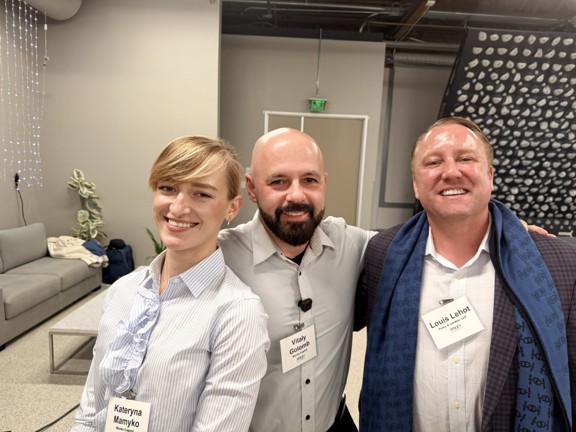
Hard Things is built for a small room and a candid conversation, and the fifth edition delivered both. Thanks to our guest, to Helm.AI for hosting, to Kateryna Mamyko and the Mavka team for putting the evening together, and to everyone who stayed to talk. Next up: a Hard Things holiday party in December, back at Helm.AI, with a short panel and more time to network. Date to come.
Coming Up
- Buildable Hours: A Hands-On AI Workshop Series, Dec. 2, Foley’s Silicon Valley office. The first of a monthly series for our general counsel community: wine, cheese and working through the AI tools together. Capped at 20, so reply for a seat.
- Deloitte Technology Fast 500, Nov. 17. Celebrating North America’s fastest-growing technology companies.
- The CFO’s Risk Stack: What Breaks Between Series B and the S-1, Nov. 18, San Francisco. With Open Future Forum, Lockton, Robert Half | Protiviti and First Citizens Innovation Banking. Request a seat.
- Mavka Capital growth event, Nov. 18. Foley & Lardner is partnering with Mavka Capital on an evening for founders and investors focused on scaling companies. Watch for the invitation.
- AI:360 Summit, Nov. 19, Palo Alto. Invite-only, on the full life cycle of AI. If this is your world, send me a note.
- Ski + Tech Summit, Jan. 27–29, Park City, Utah. Roundtables in the lodge, chairlifts in between. RSVP to Kelsey Kozier at Foley in Salt Lake City.
Building or backing a hardware or physical AI company? If you are raising, selling or stepping into a bigger seat, my inbox is open. Connecting people is still the best part of this job.
About Louis Lehot
Louis Lehot is a partner at Foley & Lardner LLP, based in Silicon Valley and San Francisco. He advises entrepreneurs, investors and public and private companies through every stage of growth, from venture financings to M&A exits, IPOs and fund formation. His clients build in artificial intelligence, semiconductors, energy, health care and life sciences. Louis is recognized by Chambers USA for venture capital and startups, and was named a 2027 Lawdragon 500 Leading Dealmaker. He is a two-time faculty member at Stanford Directors’ College. Clients call him a “master networker,” and he co-hosts Hard Things with Mavka Capital to bring founders and investors into the same room.