



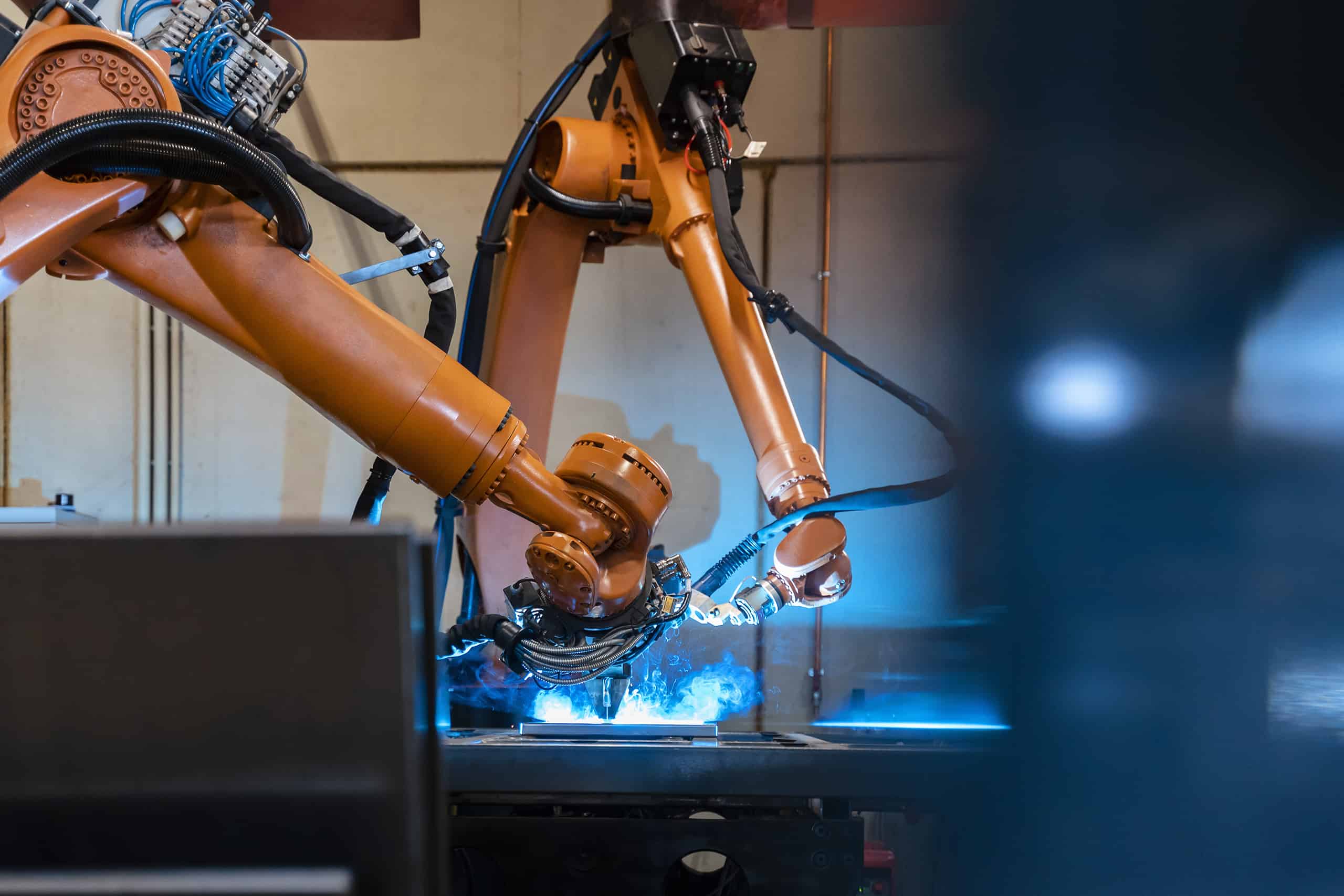
Hard Things: Chris Yeh Says Physical AI Needs More R2-D2 and Less C-3PO

Key Takeaways
- What happened: On September 28, 2026, together with our friends at Mavka Capital, Foley & Lardner Silicon Valley hosted the fourth installment of our “Hard Things” series for founders, funders and friends that are focused on building physical AI companies. The highlight of the evening was Mavka’s Vitaly Golomb interview of Chris Yeh, co-author of “Blitzscaling,” about doing just that with companies building in the physical AI space.
- When physical AI pays off: When it brings software’s scale to physical work. Yeh says the first wins will come from jobs that are dull, dirty or dangerous.
- Humanoid robots: Yeh is bearish on humanoids and bullish on robotics. The cheapest humanoid costs about $20,000. Most people in the room would pay closer to $1,000 for a robot built for fun.
- The hardest step: Moving from pilot to deployment means changing customers’ minds. Founders must show buyers exactly what the robot will do for them.
- The real moat: Lock-in, through network effects and switching costs, matters more than hardware or data. Growth is a feature of blitzscaling. Lock-in is the reason to do it.
PALO ALTO, Calif. — A robot that walks toward you on command is a demo. One that also walks backward is progress. One that pays for itself on a warehouse floor is a business.
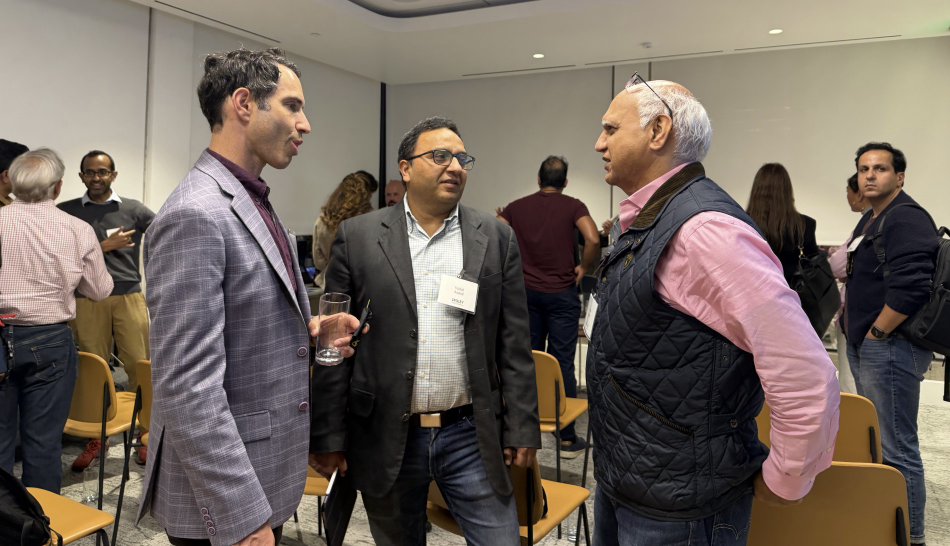
Most physical AI companies sit somewhere between those three. That gap was the subject of the fourth Hard Things evening, which Foley & Lardner and Mavka Capital hosted on Sept. 28. Vitaly Golomb, managing partner of Mavka Capital, interviewed Blitzscaling co-author Chris Yeh in a broad-ranging discussion followed by networking among the many founders, funders and friends in the audience.
The series was back after a summer break, and the room was full. A show of hands found mostly founders, about half of whom had raised outside money. The rest were investors. “Founders, look around,” Golomb said. “That’s who you need to talk to.”
Our guest was Chris Yeh, founding general partner of Blitzscaling Ventures. He wrote “Blitzscaling” with Reid Hoffman and co-wrote the bestseller “The Alliance” with Hoffman and Ben Casnocha. Over three decades, Yeh has founded, advised or invested in more than 100 startups, including Ustream and UserTesting.

Back to Atoms
Golomb opened with the big question: When does AI become physical in a way that makes money?
Yeh answered with history. From the dawn of farming until about 1750, the average person’s economic output barely moved. Then steam and electricity took over work once done by human and animal muscle. Output per person rose many times over.
That revolution made workers more productive, but it still needed workers. It still does. Much of today’s AI spending goes to the electricians and construction crews building data centers. “We all still live in the world of atoms,” Yeh said.
His book argues that bits are easier than atoms. AI is the first technology that could give physical work the kind of scale software enjoys. That promise is what’s driving the money.
There is a less noble driver, too. Software looks easy to copy now that anyone can build an app with AI. So many venture investors have suddenly found religion on hardware.
He also kept expectations in check. He gave an example of a company that showed him a robot that walked toward him on command. When he asked it to walk backward, it didn’t. “There’s a long distance between that and an order of magnitude change in productivity,” he said. “But we’re moving in the right direction.”
Bet on R2-D2, Not C-3PO
Yeh is bearish on humanoid robots and bullish on robotics. He explained the difference with a poll. Who was more useful to Luke Skywalker, C-3PO or R2-D2? The room picked R2-D2, a robot that helped bring down the Galactic Empire without a human shape.
Silicon Valley, he said, tends to build what science fiction showed it. Humanoid robots have starred on screen since “Metropolis” in 1927. Founders then reach for reasons, such as the claim that the world is built for human bodies. Yeh’s reply: Dogs follow us almost everywhere on four legs. They don’t burn half their energy staying upright.
Then came the price test. Would you pay $10,000 for a humanoid robot built mostly for fun? $5,000? $1,000? Hands went up only at the bottom. The cheapest humanoid today costs about $20,000.
Meanwhile, robots already live in our homes. Many in the room own a robot vacuum. Nearly everyone owns a dishwasher. Neither looks like Rosie from “The Jetsons.”
Golomb added a safety point. A 100-pound machine walking among pets, children and seniors raises far harder questions than a toaster. Car plants have used robots for decades, and none of them wear overalls.
Dull, Dirty, Dangerous — and Specific
So where is physical AI already worth the money? Yeh cited a rule of thumb from fellow investor Simon Lancaster: Robots are best at work that is dull, dirty or dangerous. “Preferably all three,” Yeh said.
Dangerous means forges, hazardous sites and, most visibly, combat drones. Dirty means jobs no one wants, like sorting garbage. Dull means repetitive tasks that waste human judgment.
Golomb then asked what a physical AI company must get right before it can grow fast. Yeh pointed to a problem generative AI already has. Users struggle to find uses beyond homework, reports and funny pictures. With robots, the costs and risks are higher, so the payoff must be higher too.
His advice: Mine your own industry experience for the less obvious but very clear places where goods get moved around. One of his investments, still in stealth, builds a logistics robot that doesn’t look human. It makes supply chains far more productive.
The hardest step from pilot to steady sales, he said, is changing minds. That is why some startups now skip selling tools to incumbents and build AI-first rivals instead, such as AI-native law firms. “It is easier to change people than it is to change people’s minds,” he said. That line landed with the lawyers in the room.
The lesson for founders: Don’t ship a general-purpose robot and wait for customers to find a use. “You have to lead the horse to water,” Yeh said. “You’ve got to figure it out for them.”
Blitzscaling Is About Lock-In
Where does a lasting edge in physical AI come from? Hardware, data, workflow or distribution could all work, Yeh said. But he pushed the room to think about lock-in.
People hear “blitzscaling” and think of breakneck growth. Growth is a feature, he said, not the reason. The reason is a market where the customers you win stay with you, because of network effects or high switching costs. Unique hardware rarely stays unique. Proprietary data isn’t always available. So every founder should answer one question: What stops a customer from swapping you out?
From where we sit, that answer often lives in the paperwork: multiyear terms, deep integration and clear data rights. Get those right early, before the first big customer signs.
Golomb asked about this spring’s “software is dead” panic. Mr. Yeh polled the room again. Most people had used AI to build an app. But more had built their own CRM and abandoned it than were still using one. “It’s not a genie,” he said. Good software still takes skill and upkeep.
For software investors who feel lost, his answer was moats that don’t depend on code. Network effects let weaker technology win all the time. VHS beat Betamax by getting there first. Blu-ray beat HD DVD the same way.

Golden Nuggets
The lines worth keeping, and what to do with each.
- “We all still live in the world of atoms.” Software never changed where most economic value sits. Physical AI is a bet on scaling the work software couldn’t reach.
- R2-D2 beat C-3PO. The most useful robot in “Star Wars” never needed a human shape. Design for the job, not the movie.
- Dull, dirty, dangerous —”preferably all three.” If your use case doesn’t hit at least one, keep looking.
- The $20,000-to-$1,000 gap. That is the distance between today’s cheapest humanoid and what people would pay for a robot built for fun. Until it closes, a humanoid demo is not a business.
- “It is easier to change people than it is to change people’s minds.” That is why AI-first companies are replacing incumbents instead of selling to them.
- “You’ve got to figure it out for them.” Customers won’t find the use case on their own. Sell the job, not the platform.
- Growth is a feature; lock-in is the reason. Before you raise money to scale, name what keeps a customer from leaving—and put it in the contract.
- “It’s not a genie.” AI coding hasn’t killed software companies. Most homemade CRMs end up abandoned.
- Betamax was better. VHS won. Network effects beat better technology. That is good news for software investors hunting for moats.
One More Thing
Hard Things is built for a small room and a candid conversation. The fourth edition delivered both. Thanks to Chris Yeh for reminding us about “Star Wars” and the candor; to Kateryna Mamyko and the Mavka team for putting the evening together; and to everyone who stayed to talk afterward.

The next Hard Things is in the works. Watch this space for the date and speaker.
Coming Up
- Sidebar Summit x a16z SF Tech Week, Oct. 5, San Francisco. Sidebar Summit brings together leaders in technology, venture capital, startups, government and academia. If you’re in town for Tech Week, come find us.
- Ready for Anything: IPOs, SPACs and Capital Market Shifts, San Francisco. Our next off-the-record evening for CFOs, founders and investors. Topics include when to go public, SPACs versus traditional IPOs, and keeping several exit paths open. No slides. No vendor pitches. Request an invitation. Missed the last one? Read our takeaways from the going-public panel.
Building or backing a physical AI company? Foley & Lardner and Mavka Capital can help on the legal, capital and strategic side. Reach out.