


And other notes from the One Way Summit in San Francisco
Yesterday, I sat on the main stage at the One Way Summit in San Francisco with Immad Akhund of Mercury, Nicolas Dessaigne of Y Combinator and Suzanne DiBianca of Salesforce. Scott McGrew of NBC Bay Area moderated. The panel was called “Investing in the Impossible: The 2027 Playbook.”
Scott opened with a thesis. AI has made software cheap to build, he said, so the money may move to things AI cannot simply code into existence: fusion, robotics, quantum, energy, climate.
Half of that is right. The half that is wrong matters more.
The money has not moved away from AI. It has moved into AI at a scale venture has never seen: $515.8 billion of U.S. deal value through September, 82.7% of it to AI, and one third of the world’s venture dollars to OpenAI and Anthropic alone.
What Scott was sensing is real, though. Fusion raised a record $4 billion this year and robotics more than $74 billion. The funds that learned to write billion-dollar checks for model labs will now write $500 million checks for a tokamak. The story of 2027 is not software versus atoms. It is that the check size changed, and the documents changed with it.
What was science fiction five years ago?
Scott’s first question went around the table. Name something that will be possible in 2027 that most people would have called science fiction in 2021.
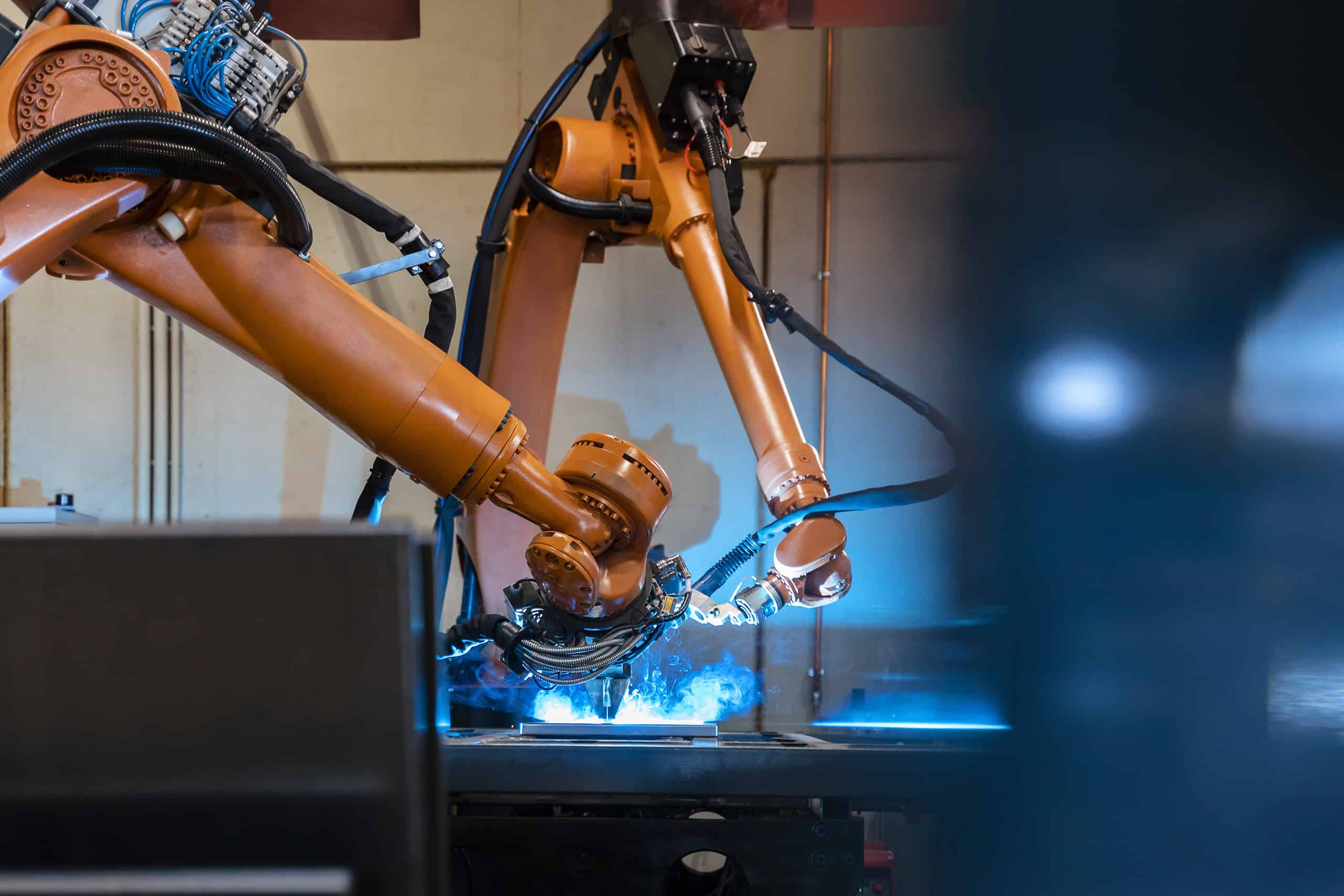
My first answer was physical AI. Hardware and robots that take over the tasks that are dirty, dull or dangerous. That is the next big wave, and the capital is already moving toward it. Nicolas put a number on it: hardware has gone from 5% to 25% of the Y Combinator portfolio. He also offered the caution: venture still prefers software, because software is more capital efficient. Both things are true, and the tension between them is where the deal terms get interesting.
I gave the lawyer’s version. The reactor is not the science fiction. The cap table is.
Five years ago, a founder with no product, no revenue and a fifteen-year path to a power plant would have been told to go raise a seed round. This year, that founder raised hundreds of millions at Series A. Commonwealth Fusion Systems closed a $1 billion round before it has built its plant. In those closings, a venture fund, a sovereign wealth fund and a hyperscaler all sign on day one, and the power purchase agreement is signed before the physics is proven. That was unthinkable in 2021. In 2027 it is a Tuesday.
Is AI breaking the venture model?
Nicolas sees every YC batch, and his read is that founders are building real companies with three people and almost no capital. Immad, who banks thousands of those companies, sees the same thing in the account balances.
Both are right, and that is exactly the point. AI is not breaking the venture model. It is tearing it down the middle.
On one edge, software companies that used to need a $5 million seed now need a credit card and three people. They raise smaller, later, or never, and when they do, the fight is about control, not price. Founders keep the board, keep the right to sell, and increasingly take money off the table at seed. On the other edge, the model labs, data centers, fusion and robotics companies have stopped looking like venture at all. Those rounds read like project finance: milestone tranches, compute commitments in the purchase agreement, strategics signing a commercial contract the same day as the equity.
What is dying is the middle: the $20 to $50 million Series A and B for a normal software company. The data backs it up. Non-AI companies at Series A are getting a median valuation of about $42 million. AI companies at the same stage are at $78 million. Same stage, same month, nearly double.
The business model question
Somewhere in that exchange I said the quiet part out loud. Subscription business models are on life support. The table did not let me off easy, and the disagreement was the best part of the hour.
Immad pushed back hard. Software as a service is not dead, he said, and seat-based subscription pricing still dominates what he sees across thousands of startup accounts at Mercury. Nicolas split the difference. OpenAI and Claude have big subscription businesses, he noted, but they are not necessarily profitable. Suzanne went another direction. She likes consumption and outcome-based models, and her advice to founders was blunt: focus on EBITDA.
Nicolas then said the thing that quietly settled the argument. At YC you do not bet on the business model. You bet on the founders. A company arrives on the first day of the batch selling one thing to one customer, and walks across the stage at Demo Day selling something else to someone else. The model is a hypothesis. The founder is the asset. Every pricing debate on that stage was, in the end, a debate about something the best founders will have changed twice before the Series A.
Here is where I landed. Whatever the pricing model, systems of record will remain the source of truth, the data and the value. Agents will sit on top of them, and agents will be priced by the task or the outcome, but the company that owns the record owns the customer. In the documents that means the data rights clause now matters more than the pricing schedule. When a company sells outcomes instead of seats, the revenue line gets harder to audit, the customer contract becomes a diligence item, and the investor stops underwriting recurring revenue and starts underwriting margin. The bar has moved from demos to deployments with measurable results, and term sheets are starting to say so.
Who wins, incumbents or startups?
My answer was that the question is out of date. The incumbents stopped waiting to see who wins. They bought in at the seed.
Corporate investors account for roughly 88% of U.S. AI venture deal value this year. Not 88% of the deals. 88% of the dollars. Show me a cap table for a serious AI or hard-tech company and I will show you a strategic in it, and next to the stock purchase agreement a commercial agreement that is usually the more important document.
So incumbents still win what they have always won, and startups still win what they have always won. What is new is that the two are legally married from the first round. The deal I spend the most time on now is not the acquisition. It is the strategic investment, plus the compute deal, plus the right of first refusal. My advice to founders: take the money, but read the side letter.
How do you fund a technology that takes 20 years to pay off?
Scott aimed this one at me. Suzanne had just told founders to focus on EBITDA. I agree. For a fusion company, EBITDA is fifteen years away, which is exactly the problem. Patient capital still has a fund agreement with a term date. The patience is in the documents or it is not real.
You cannot fund a 20-year technology with a ten-year venture fund, and a ten-year venture fund is most of the money at this conference. So every fusion, quantum and robotics financing I have seen this year is built around that mismatch. Four things show up in the documents.
First, the cap table is layered by time horizon: venture takes the first five years, sovereign and crossover money the next ten, and a utility or hyperscaler takes the back end with an offtake agreement. Second, the rounds are tranched to milestones, first plasma or a qubit count, so the term sheet reads like a construction loan. Third, government money is now a real tranche, and the grant and the equity have to agree on who owns the technology. Fourth, liquidity is manufactured mid-course through continuation funds, structured secondaries and, this year, public listings for fusion companies a decade from revenue. Those are not exits. They are refinancings dressed up as exits.
Twenty-year technology does not get funded by patient capital. It gets funded by a relay race. The lawyer’s job is to make sure every runner’s rights survive the handoff.
Agents and money
The sharpest exchange of the afternoon was between Scott and Immad, on what happens when AI agents start touching money.
Today, Immad said, agents are not making payments. They read, they recommend, they draft, but a human still approves the transfer. Scott pressed on what happens when that changes. What if an agent is tricked into paying a fraudster? What if it does something nobody intended? Immad’s answer was security and failsafes: spending limits, human approval above a threshold, and the ability to stop an agent cold.
I listened to that as a lawyer and heard a liability question. When an agent moves money and something goes wrong, the contract has to say who eats the loss: the bank, the software vendor, the customer or the model provider. Right now most agreements do not say, because nobody has had to decide. By 2027 they will.
Doing good, in the documents
Suzanne brought the conversation to impact, which is her life’s work. Salesforce set aside 1% of its equity at founding for giving back, and that model has since been copied and, in some cases, exceeded. She pointed to Google and Okta among the companies that went further.
I added the lawyer’s observation. Doing good used to live in a foundation next to the company. Now it is being written into the company itself. Anthropic put a Long-Term Benefit Trust into its governance, with the power to appoint directors, and a charter that makes keeping the technology from harming people a duty of the company rather than a marketing line. Agree or disagree with the structure, it is a legal commitment with teeth, and I expect to see more of them.
Anthropic IPO
Anthropic’s IPO should relieve a pressure point the whole ecosystem feels. Early-stage funds raised in 2020 and 2021 have barely returned a dollar, and limited partners cannot re-up without distributions. A listing at the scale people are discussing, around $2 trillion, would put real cash back into the funds that backed Anthropic early, and that cash flows downhill. It would not fix the exit drought. It would be the first rain in three years.
The Biggest Surprise in 2027?
Scott asked us each to pull out a crystal ball for 2027 and predict what will be its biggest surprise in store for us.
My answer is that unicorns will finally got repriced. We entered this year with 992 active unicorns worth $5.7 trillion on paper and 18 IPOs in a quarter. That math does not work. A year from now, I expect we will call 2027 the year of the quiet recap. Hundreds of down rounds. Structured secondaries at 40 cents on the dollar. Pay-to-play financings. Continuation funds that were really limited partners taking the keys. None will get a press release. All will get a 40-page amended charter.
The surprise will not be that it happened. It will be how orderly it was, and that the AI winners kept raising at record valuations the entire time, right next to it.
Scott asked what investing in the impossible looks like in 2027. Here is my answer. The impossible thing is not the fusion plant or the robot. Engineers will get those built. The impossible thing is the paper that pays for them: a cap table that holds a venture fund, a sovereign, a hyperscaler, a government grant and a public-benefit trust together for twenty years without anyone losing control. That is what we are drafting now. Whichever way it goes, I will know a year before you do. It will be in the term sheet.
My thanks to Eugene Malobrodsky and Mimi Yagoub of One Way Ventures for putting on the summit, and to Scott McGrew for running a panel where the panelists were allowed to disagree.
Figures are from the Q3 2026 PitchBook-NVCA Venture Monitor, CB Insights and Dealroom.
About the author
Louis Lehot is a partner at Foley & Lardner LLP in Silicon Valley, San Francisco, and Los Angeles, advising founders, boards, and venture capital and growth equity investors on M&A, public offerings, venture and growth financings, and corporate governance. His path runs through more than 25 years inside Big Law, a Silicon Valley boutique he founded, and a deliberate return to Big Law at Foley in 2021, where Chambers USA has ranked him in Venture Capital (California) every year since, in Startups & Emerging Companies (USA – Nationwide) in 2025 and 2026, as well as Debt and Equity Capital Markets (California) in 2011-2015. He was named a 2027 LawDragon. He has written more than 50 articles on deal markets and publishes The Weekly Silicon Valley Docket and The Growth Equity Docket at louislehotattorney.substack.com.